
The trucking industry relies heavily on maintaining the cleanliness and functionality of refrigerated vehicles, particularly for the transport of perishable goods. Reefer washouts are crucial in ensuring food safety and compliance with health regulations. This article investigates whether Blue Beacon Truck Wash offers reefer washouts, examines comparative services, reviews customer experiences, analyzes the economic implications, and discusses the technological aspects of washout procedures. By exploring these facets, fleet managers, trucking owners, and industry supervisors will gain a clearer understanding of their options and the importance of reliable washout services.
Reefer Washouts on the Open Road: Blue Beacon Offerings and the Rise of Alternatives
Reefer washouts are a specialized service that matters to fleets operating refrigerated trailers. The goal is to remove residues that can affect product quality and regulatory compliance. In the broader network, Blue Beacon Truck Wash is a familiar brand, but there is no definitive public confirmation that reefer washouts are offered at all locations or on a fixed schedule. Some sites may operate on Sundays while others do not, pushing fleets to nearby alternatives for weekend needs. The key takeaway is that reefer washouts cannot be assumed from a brand alone and must be confirmed at the specific site. Across Texas and along major corridors, new facilities have expanded access to reefer washouts. Fortress Environmental Services opened a high capacity facility along the I-10 corridor near Waelder TX that explicitly advertises reefer washouts. This adds a practical option for fleets running that route and demonstrates how the market is evolving to meet the demand for refrigerated cleaning. For operators evaluating options, document three things at a minimum: the exact service menu and hours of the planned location; whether the site can accommodate reefer washouts on the needed day; and a fallback option with a facility that clearly lists reefer washouts in its offerings. When planning, consider keeping Fortress or other reefer capable facilities in mind as contingency options. Understanding what a reefer washout entails helps frame expectations. The process goes beyond exterior washing and includes interior cleaning of walls, floors, and ceilings, with attention to moisture control and proper waste management. Steps typically involve pre rinse, high pressure washing, specialized detergents, thorough rinsing, and sanitation or deodorization as needed. The practical implications extend to customer requirements and regulatory expectations. Some customers require cleanliness standards for freight acceptance, and others specify sanitation or odor control levels before loading. If a given Blue Beacon site cannot support reefer washouts within a required window, it can add time and fuel costs. The market response to new facilities that advertise reefer washouts reduces this risk and broadens the toolkit available to fleets. To plan effectively, confirm service offerings at planned wash locations, call ahead if necessary, and maintain a short list of alternative providers that explicitly advertise reefer washouts. This approach minimizes schedule risk and keeps trailers ready for the next leg of a trip. External insight into Fortress shows how the market is expanding to serve reefer cleanliness more reliably, with new facilities near major corridors. External resource: Fortress Environmental Services announced the opening of a new facility offering exterior wash, trailer wash, and reefer washout services along the I-10 corridor near Waelder TX. https://www.fortressexp.com/news/fortress-opens-2-5-million-frac-tank-cleaning-truck-wash
Evaluating Reefer Cleaning Options: Blue Beacon, Florida Status, and Fortress in Texas
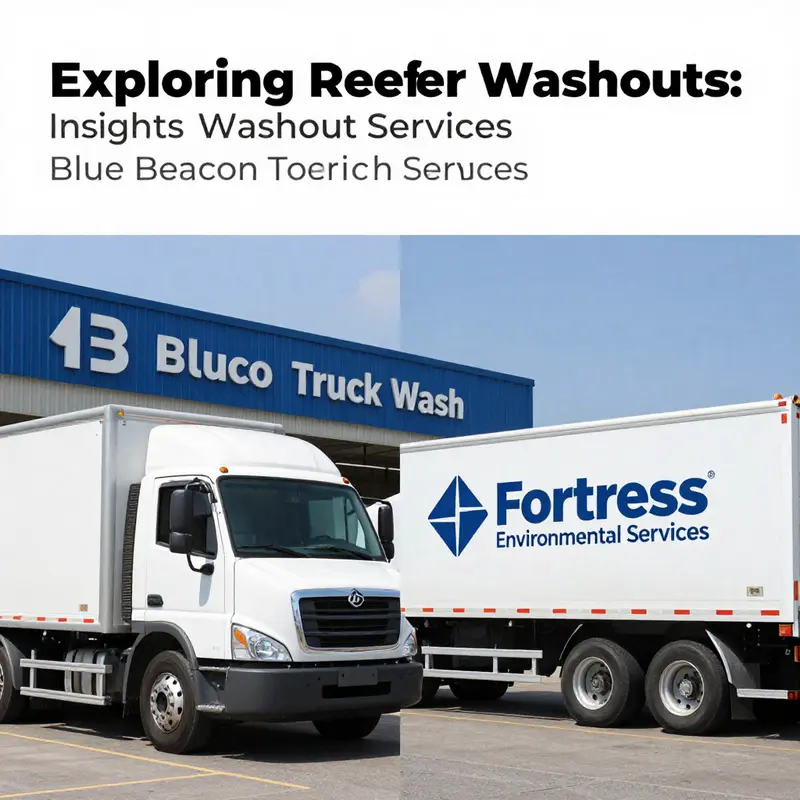
This chapter examines whether a well-known truck-wash brand offers a dedicated reefer cleaning service and how fleets should verify availability.
Public listings commonly describe general exterior washing for fleets, but explicit reefer-cleaning labels are not always present. In Wildwood, Florida, the Blue Beacon Truck Wash, Inc. entity is listed as inactive, which can affect local service access and bay availability. Fleet managers should verify current capability directly with the shop, especially on Sundays when operations may differ.
A contrasting development is Fortress Environmental Services, which opened a purpose-built facility in Texas along the I-10 corridor between Houston and San Antonio near Waelder, advertising external tractor and trailer cleaning alongside dedicated reefer cleaning. This demonstrates that explicit reefer-cleaning capability exists nearby, even if a chain location does not advertise it.
The practical takeaway is to treat reefer cleaning as a distinct capability: confirm scope (interior and exterior cleaning), drying, and sanitation practices before booking, and consider nearby specialists with published reefer-cleaning services to minimize downtime and protect product quality.
Between Availability and Uncertainty: Reefer Washouts, Blue Beacon, and the Quiet Gap in Public Feedback
Reefer washouts are a specialized task in the truck wash ecosystem. They require careful handling of refrigerated trailers, where residual odors, residue from the cold chain, or stubborn contaminants can creep into seams and corners that standard exterior washings miss. For fleets that rely on reefers to move perishables, the question is not only whether a wash is offered but whether it is offered with speed, reliability and compliance. In public materials, Blue Beacon Truck Wash is a large, nationwide presence whose literature emphasizes regular wash services across many locations. Yet the public record does not clearly confirm that reefer washouts are routinely performed at every site. The nuance matters because cross country routes through the Southeast or Texas can hinge on reefer capabilities for scheduling, downtime, and total cost. The clearest takeaway is that Blue Beacon does not unambiguously certify reefer washouts at all sites, and Sundays, when mentioned, can be handled differently at sister locations. This distinction shapes how fleets plan cycles and how drivers interpret a stop on a long haul.
To understand the landscape, it helps to place reefer washouts within the broader wash and maintenance ecosystem. Exterior washouts focus on the shell and general grime and are in demand for visible cleanliness and corrosion reduction. Reefer washouts go deeper to address odors, scale in crevices, and any drift from the cold chain that can affect re entry after a layover. Not all sites are equipped for the specialized processes; some offer a standard rinse but may lack ventilation, high temperature cycles, or wastewater handling required for a compliant reefer wash. Others may offer reefer capability but with longer cycle times. These realities explain why experience with reefer washouts varies by site and time of day.
Public records around Blue Beacon capability lean toward cautious interpretation. The chain does not clearly document reefer washouts and Sunday operations often point to different arrangements at sister stores, creating a practical gap for fleets that need predictable service windows. The prudent approach is to contact the specific location to confirm if reefer washouts are part of the standard service mix and what scheduling or disposal requirements apply. A direct inquiry helps avoid misalignment when a fleet arrives with a strict timetable and a need for a precise cleaning regime.
Fortress Environmental Services recently opened a new facility in Texas, between Houston and San Antonio along I 10 near Waelder. The project represents a substantial investment that signals market acceptance of reefer washouts as a needed service for long haul cycles. The new facility is designed to handle moisture, pressure and the specialized cleaning reefers require. While this does not imply universal coverage for Blue Beacon, it illustrates a lane of service development to support refrigerated units along a critical corridor. For fleets that traverse Texas or use I 10, Fortress may become a reference point for planning stops or evaluating alternatives to chain washes.
From a customer feedback perspective, public impressions of reefer washouts at Blue Beacon remain sparse. Reviews tend to discuss overall service quality rather than technical outcomes of a reefer wash. The absence of detailed reefer narratives is not evidence of no service; rather it reflects what tends to surface in public reviews: broad sentiment about professionalism and speed, with less focus on interior finishes or door seals. Operators should seek explicit confirmation from the site about whether a dedicated reefer wash is available, what the cycle includes, and how it handles interior components like cooling units and seals. Where possible, request a sample or case examples to compare time on bay, odor mitigation, and any post wash inspections.
Practically, fleets can leverage guidance from industry resources about cleaning for sensitive cargo and food grade applications. Such material helps managers evaluate wash thoroughness and compliance. The Fortress Texas example highlights that having a dedicated reefer capability in a nearby facility can influence route planning and rate negotiations. The takeaway is clear: site level communication and a robust inventory of reefer capabilities matter. The fleet planner should look for explicit scope statements, measurable outcomes, and driver level feedback so that the next wash is predictable, compliant and efficient.
We end with a practical expectation: when charting long routes or weekly maintenance for refrigerated fleets, expect some ambiguity about reefer washouts and plan accordingly. Call the location, confirm service scope, and request details that translate into measurable outcomes. If you want further context, consider resources on facility management for truck wash businesses and best practices for cleaning food grade tankers. Fortress new Texas facility demonstrates that reefer specific capacity is becoming a differentiator on major corridors. The trend supports a more transparent and site specific map of reefer services, reducing downtime and improving reliability for refrigerated fleets.
Reefer Washouts and the Cold-Chain Economics of Clean Containers
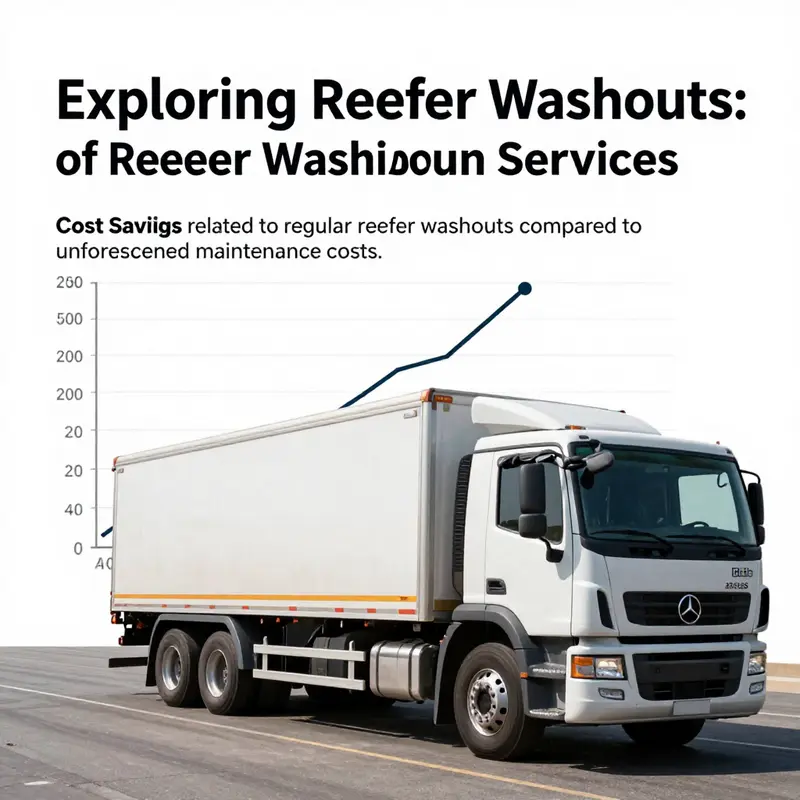
Reefer washouts occupy a critical corner of the cold-chain economy. They matter not only for hygiene but for product integrity, shelf life, and service reliability. A clean and properly maintained reefer trailer reduces the risk of cross-contamination, spoilage, and off-spec readings, helping shipments arrive in spec and on time. In a competitive temperature-controlled logistics market, sanitation is a revenue lever that can influence dock-turns, carrier utilization, and contract retention. The availability of washout capacity—whether at fixed facilities along key corridors or via mobile crews—shapes fleet uptime and planning. New infrastructure along major routes, with dedicated reefer wash capabilities, can cut downtime by enabling in-one-pass sanitation and minimize layering of service visits. Fleets benefit from faster turnarounds, lower spoilage risk, and stronger compliance with hygiene standards and cross-contamination controls. Best practices emphasize validated sanitization cycles, temperature history logging, and auditable hygiene checks. Operators should verify local capabilities and align washout cycles with cargo profiles to avoid cross-contact when switching products. In sum, reefer washouts are a strategic asset that underpins product quality, customer trust, and the long-term profitability of cold-chain transportation.
Reefer Washouts on the Open Road: Cleaning Technology that Keeps Cold Cargo Clean
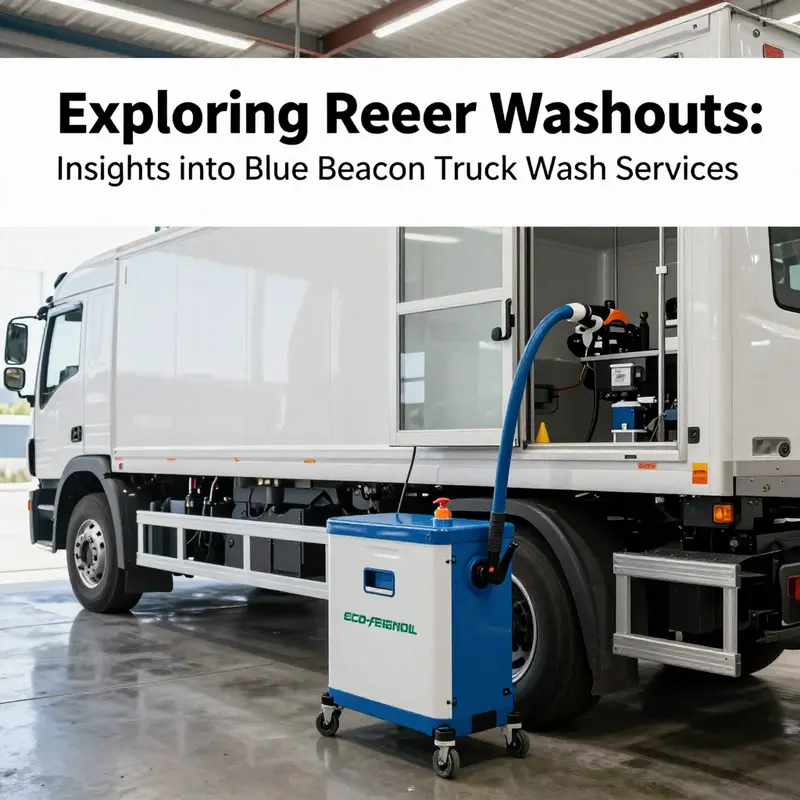
When fleets ask whether national truck wash networks offer reefer washouts, answers vary by location and equipment. Public notices often note hours and nearby sister sites, but they rarely spell out whether refrigerated trailers are included in standard wash options. In practice, availability depends on each site’s gear, staff, and how it markets its services to drivers. A reefer washout matters because cargo in refrigerated trailers can be sensitive to odors, residues, and contaminants that linger after a prior load.
The core of effective reefer sanitation is a combination of cleaning technology and disciplined workflows. High-pressure hot-water cleaning helps dislodge residue from walls, floors and heat exchangers, while chemical detergents aid odor control. When properly calibrated, the hot-water wash disrupts biofilms and reduces cross-contact risk. In a national network, standardizing cycles helps ensure a consistent level of cleanliness across sites.
Automated wash cycles tuned to trailer size and refrigeration units improve consistency and efficiency. Pre-rinse, detergent application, heated wash, post-rinse, and final inspection are common steps. Real-time monitoring tracks temperature, water usage, chemical dosages, and cycle progress, producing auditable records useful for compliance and accountability.
Data logging complements real-time monitoring. Each cycle records machine settings, duration, temperatures, chemical dosages, and trailer IDs. This data enables trend analysis, optimization, and traceability for perishable loads or regulated products.
A central concern is preventing cross-contamination between non-refrigerated and refrigerated trailers. Shared equipment must be thoroughly cleaned, dried, and dedicated hoses used where possible. Scheduling should minimize downtime while preserving wash quality, and drivers should verify reefer capabilities at the target site, ideally in writing. If a site cannot provide reefer washouts, nearby partners within the same network may offer configurations that suit the fleet’s needs.
Ultimately, direct site confirmation remains the most reliable path. Contact the local facility to learn whether reefer washouts are offered, what the standard cycle looks like, and what scheduling options exist.
For further reading on industry-aligned practices, see best-practices-for-cleaning-food-grade-tankers: https://tripleatruckwash.com/best-practices-for-cleaning-food-grade-tankers/
Final thoughts
Understanding whether Blue Beacon Truck Wash offers reefer washouts is critical for fleet managers and trucking operators invested in maintaining operational efficiency and compliance. While current information does not confirm their capability in this area, exploring nearby alternatives such as Fortress Environmental Services opens up viable solutions. The chapters covered not only inform about potential service offerings but also emphasize the importance of maintaining clean refrigerated vehicles to reduce costs and enhance reliability in logistics. This comprehensive insight aids decision-makers in selecting appropriate washout services while highlighting the intersection between operational necessity and service quality.