
Determining the correct pricing model for truck washing services is essential for logistics and fleet management companies. Pricing should reflect service types, vehicle sizes, washing methods, and varying local market demands. Through the exploration of these elements, fleet managers and trucking company owners can better understand how to establish competitive and profitable pricing strategies for their truck washing services. Each chapter will delve into the specifics of pricing, ensuring a comprehensive approach to managing costs and service expectations.
Pricing the Wash: Crafting Value Through Service Depth, Fleet Needs, and Vehicle Size
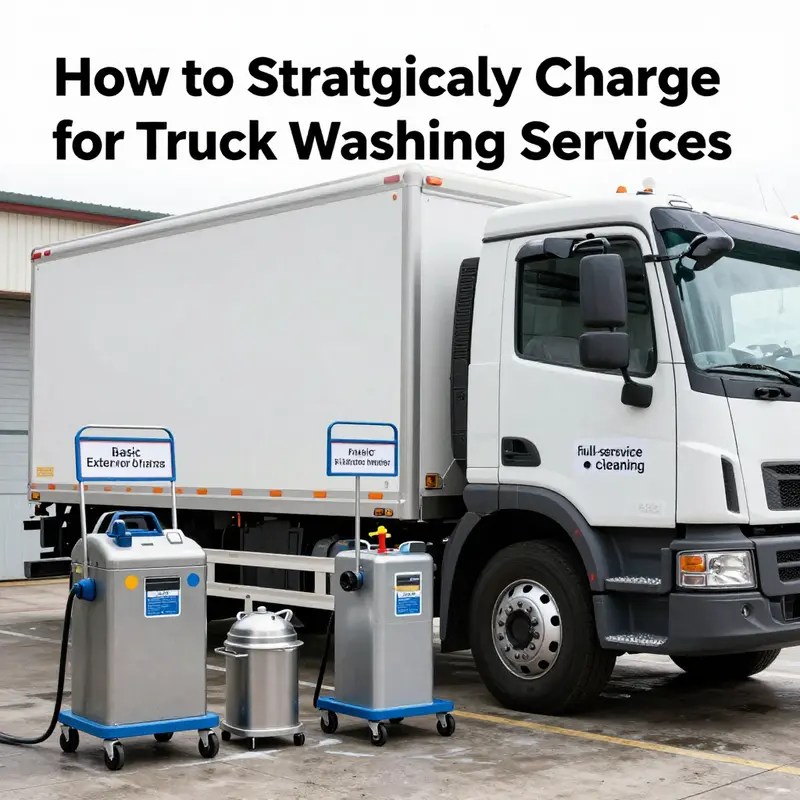
Pricing truck washing is not a single number pulled from a standard menu. It is a structured conversation between what the vehicle needs, how thorough the cleaning must be, where the work takes place, and what the operator must cover to keep the business sustainable. The chapter that follows treats pricing as a fluid, market-informed discipline, where service depth, vehicle size, and the realities of location come together to shape fair and profitable charges. At its core, charging for truck washing requires translating the value delivered into a price that reflects depth of service, the complexity of the job, and the costs incurred to complete it with consistency. This means recognizing that a basic exterior rinse is not priced the same as a full-service clean with interior detailing, wheel care, undercarriage flush, and protective finishes. It also means acknowledging that a fleet that requires regular, predictable service may accept a different pricing structure than a one-off job at a remote site. If pricing is approached as a living framework rather than a static list, operators can match client expectations with the realities of labor, materials, and equipment wear, while preserving margins that enable ongoing investment in better processes and training. The challenge—and opportunity—lies in aligning service definitions with market realities so that price signals accurately reflect the work performed, the surface area involved, and the level of protection or cosmetic improvement delivered to the vehicle and its operator.
Service depth is the most direct driver of price. A basic exterior wash, which typically includes rinsing, soap application, and a thorough drying, is designed for routine upkeep and quick turnaround. Historically, this service has occupied the lower end of the price spectrum, often landing in the range of twenty to fifty dollars depending on geography and fleet expectations. When fleets seek more than just a clean exterior—such as stain removal in certain paint areas, light contamination lifting, and a careful post-wash finish—the price moves upward. The next tier, full-service cleaning, may encompass interior cleaning, detailing, wheel cleaning, undercarriage wash, and waxing, and it can stretch well beyond the basic range. In practice, regions with higher costs of living, denser traffic, or tighter labor markets push the top end higher, and fleets that insist on higher standards of appearance or protection will pay a premium. In the larger-vehicle category, pricing naturally migrates upward as the surface area increases and the required labor and time multiply. Heavy-duty trucks, long-haul rigs, and specialty equipment demand more time, more water, and more aggressive cleaning strategies, all of which justify higher charges. Where the line is drawn between service depth and price is a strategic choice that must factor in the client’s expectations and the operator’s capacity to deliver consistently.
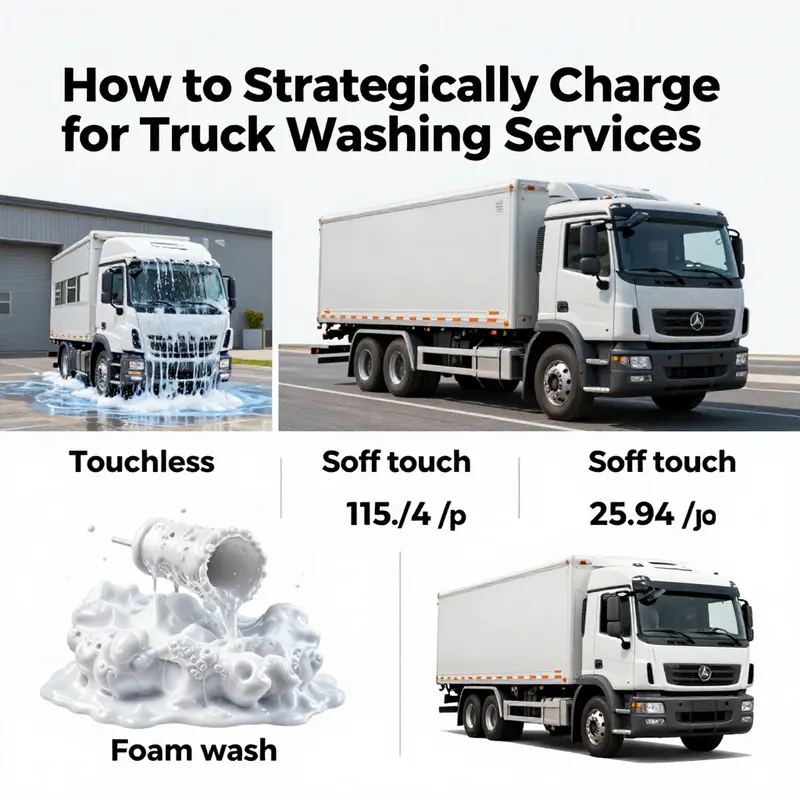
The method of washing also matters for price, because the technique used affects both results and efficiency. Touchless systems rely on high-pressure water and chemical formulations to lift grime with minimal contact. They tend to be positioned as more expensive because they often require sophisticated equipment and precise chemical programs while preserving paint integrity. Soft-touch systems, combining brushes with milder cleaners, are common in fleets that want reliable cleaning with a gentler touch on surfaces. Foam washing, which blankets the vehicle in detergent foam before rinsing, offers deep cleaning potential, particularly on heavy-duty fleets that accumulate stubborn residues. Each method has its own cost structure: water use, chemical consumption, equipment depreciation, maintenance, and the labor model needed to supervise or operate the system. A shop that can execute multiple washing methods with competence may price adjustively, offering standard options on fixed sites and tiered choices for fleets that demand specialty cleaning regimes. The consequence for pricing is clear: the more options a provider offers, the more granular the quote, and the more opportunities there are to tailor value to a client’s needs while capturing the associated costs.
Location and market demand form the ambient price pressure around truck washing. Urban centers with dense truck traffic experience higher demand, and the premium for quick, reliable service can be justified by the convenience fleets place on timeliness and location. Conversely, rural or remote spots may require special considerations, such as travel time, scheduling flexibility, and the added cost of transporting equipment to a client site. In many fleets, pricing also reflects contractual relationships rather than single-transaction charges. Bulk or contract-based pricing typically includes a menu of bundled services, periodic maintenance windows, and predictable QC checks. These arrangements produce steadier revenue and enable better capacity planning for the operator. When market demand diverges—say, a sudden surge in haulage activity near a port or industrial complex—pricing can be adjusted to manage demand while preserving service standards. The business case for such pricing is not merely margin, but the ability to allocate resources—water, chemicals, staff, and maintenance—without compromising safety or environmental compliance. In the same breath, operators can reinforce value by communicating how a structured pricing approach translates into fewer delays, greener operations, and longer vehicle lifespans for fleets that maintain higher clean standards over time. Fleet operators often look for consistency and predictability; in exchange, they accept programmatic pricing, dynamic scheduling, and even volume discounts that reward reliability and ongoing partnerships. A thoughtful blend of service depth, technique, and location-based considerations becomes the bedrock of credible pricing that clients can trust.
Technology and automation reshape the economics of charging for truck washing. Automated and semi-automated facilities reduce labor intensity, enable faster throughput, and standardize results in ways that are appealing to fleets that value consistency. In practical terms, these capabilities can support more aggressive per-wash pricing for the right mix of services, or they can justify higher price points when combined with features like ozone disinfection, advanced water recycling, and real-time monitoring of wash cycles. An operator who can demonstrate efficiency gains—shorter cycle times, less downtime between vehicles, and dependable outcomes—gains leverage in price negotiations. At the same time, automated systems carry upfront costs and ongoing maintenance. The pricing model must recover capital expenditure and depreciation while reflecting the cost savings from reduced labor. For mobile services, price construction deliberately includes the additional charges associated with travel, setup, and equipment deployment. The challenge is to convey that the convenience of on-site service carries value, not only in the moment of cleaning but in the broader operational uptime it supports for a fleet. The end result is a balanced structure: customers pay more for on-site convenience and for higher levels of automation that deliver reliability, while the shop maintains margins that sustain investment in better equipment and skilled labor.
A practical approach to pricing starts with a clear definition of scope and a choice of pricing model. Some operators charge per wash, with transparent brackets for basic, mid-range, and full-service levels. Others combine per-wash pricing with recurring contract pricing for fleets, offering bundle options that lock in a certain number of washes per month or per quarter, sometimes with volume discounts that scale with the fleet’s size and maintenance cadence. There is also the option to apply a minimum service charge, ensuring that a site visit remains profitable regardless of the customer’s exact needs that day. For mobile operations, it is common to add a travel surcharge or a remote-location premium that reflects fuel, time, and risk. When framing quotes, it helps to spell out precisely what is included in each tier: exterior only, exterior plus standard wheel cleaning, internal cleaning, undercarriage wash, waxing, and optional disinfection or eco-friendly additives. A well-structured quote reduces friction and clarifies the value proposition. It also creates natural opportunities to upsell: for a client who starts with an exterior wash, a light interior wipe or a basic wheel detailing can be offered as an add-on with a clear return on investment in appearance and protection. The pricing conversation, thus, becomes less about “what is the price?” and more about “what is the value delivered for this fleet on this schedule under these conditions?”
Beyond the numbers, the art of pricing for truck washing must account for costs and the discipline of forecasting. Labor is a major variable, and it must be matched to the required service depth and the vehicle’s complexity. Water and chemical costs vary with wash type, vehicle size, and environmental controls such as recycling and treatment of waste streams. Equipment depreciation, maintenance, and energy consumption contribute to the fixed cost base that must be covered over time. In markets that enforce environmental standards or require specific waste handling, compliance costs also become material lines in the pricing model. A mature pricing strategy aligns these cost components with market options and the fleet’s tolerance for price variation, without eroding service quality. When a provider demonstrates consistent outcomes—cleanliness that meets contract standards, reduced turnaround times, and documented fleet satisfaction—the perceived value of the service rises. In that context, fleets may be willing to accept higher price points in exchange for predictability, reliability, and the assurance that vehicle downtime remains minimized. The strategic insight is simple: price should be a reflection of the value delivered, not merely a reflection of the labor hours spent on the truck.
An operator can also leverage the broader context of operations management to support pricing decisions. A narrative about pricing that emphasizes efficiency and reliability resonates with fleet managers who prioritize uptime and regulatory compliance. In this sense, pricing is a lever for competitive differentiation, not just a margin line. The most effective pricing discussions frame the service as part of a fleet’s maintenance ecosystem: regular washes reduce grime buildup, help protect paint and coatings, improve fuel efficiency marginally through cleaner aerodynamics, and contribute to safer, more professional transport operations. Such framing supports value-based pricing, where the charge reflects the outcome rather than the activity alone. It also helps justify investments in modern equipment and eco-friendly practices. Fleets often respond to value signals such as reduced water usage, lower chemical runoff, and the ability to schedule washes around dispatch needs. Operators can capture this value through education and transparent communications about what the wash delivers in terms of appearance, protection, and compliance.
In practice, pricing is most effective when it is anchored in a coherent policy that accounts for variation while maintaining fairness. A single, rigid price list often fails to capture the realities of heavy-duty work, remote locations, or seasonal demand fluctuations. A flexible framework supports adjustments to reflect the actual job scope, distance traveled for mobile services, and the specific requirements of a fleet contract. That flexibility should be coupled with clear documentation: scope of work, the exact services included, any add-on options, and the terms of the contract. Clarity limits disputes and strengthens relationships with fleet customers who rely on predictability for budgeting and planning. To emphasize this point through a practical lens, consider an operator who can offer a tiered structure that aligns with fleet sizes and maintenance cycles. A small fleet might pay a modest per-wash fee for exterior cleaning, while a mid-sized fleet could access a bundled package that includes quarterly undercarriage washes and a seasonal waxing option. A large fleet might participate in a full-service program with a guaranteed number of washes per month, priority scheduling, and a premium option for on-site disinfection. Each tier, though distinct in scope, remains part of a single pricing philosophy that rewards consistency, reliability, and value for money. The result is a simpler, more persuasive conversation with fleet managers who are evaluating competing service providers and trying to gauge total cost of ownership over time.
From a strategic perspective, it is useful to link pricing decisions to operational realities. If a facility offers an extensive line of services and can absorb the costs of sophisticated cleaning methods, it should structure pricing to reflect both the enhanced outcomes and the capital expenditures involved. If a mobile service is primarily a logistics solution that reduces downtime for the client, the price should carry a geographic premium that mirrors travel, setup, and the convenience of on-site service. The best practices incorporate transparent communication, precise scope definitions, and structured options that allow clients to tailor service to their exact needs while preserving predictable margins for the business. In this way, pricing becomes not only a means of covering costs but a vehicle for enabling fleets to maintain high standards of cleanliness, safety, and efficiency. It is a balance of service depth, vehicle size, method, and market context—a balance that, when managed well, yields sustainable profitability and long-term client partnerships.
For readers seeking to deepen their understanding of operational context and pricing strategy, a practical reference on facility management for truck wash businesses offers a structured framework for pricing, scheduling, and service coordination. This resource can help operators align pricing with broader facility considerations, from workflow design to equipment maintenance and workforce development. See the linked guide for detailed guidance on how to connect pricing decisions with day-to-day operations. facility management for truck wash businesses.
Finally, to stay aligned with current market dynamics and pricing benchmarks, station-level data and regional variations matter. For the latest, industry-standard pricing models and service offerings, consult the external reference that aggregates current practice and market expectations. This resource presents a broad view of what customers expect to pay and how providers structure value in different regions and for different vehicle classes. In practice, the combination of service depth, vehicle size, and the operational model determines where your pricing lands within the spectrum of fairness and profitability. As the market evolves—with fleets seeking integrated disinfection, eco-friendly water management, and smarter control systems—the ability to price for these advanced capabilities becomes part of a competitive advantage. Charging for truck washing is thus less about chasing a single price point and more about articulating a coherent value proposition, backed by consistent execution, transparent terms, and a scalable approach to service depth that grows with the fleet’s needs and the operator’s capabilities.
External reference on pricing and service offerings: Truck Wash Services and Pricing. https://www.truckwash.com/services-and-pricing
Sizing the Bill: How Vehicle Dimensions Shape Truck-Wash Pricing
Pricing a truck wash begins with size. Vehicle dimensions determine how long the wash takes, how much water and chemical are required, and how many workers are needed. Bigger vehicles create a larger workload, so the price typically rises to reflect the extra labor, materials, and equipment wear involved. The guiding principle is simple: price should move with the scope of the job, not with guesswork.
Costs break down into core drivers: water, chemicals, labor, and energy. Water use grows with surface area, though efficient nozzles, recirculation, and variable cleaning paths can temper that increase. Detergent use follows a similar pattern, expanding with the area to be cleaned. Labor is often the most size sensitive factor; a compact car can be finished quickly by one technician, while a long-haul tractor-trailer may require multiple hands across a longer shift. Energy use tracks the number of wash cycles and the load on drying equipment. Together these elements shape the pricing ladder for different vehicle classes.
Operators commonly employ tiered or variable pricing. A basic exterior wash may cover small vehicles, with add ons for undercarriage cleaning, wheel detailing, or interior care priced higher for larger vehicles. Some shops offer capped bundles or volume discounts for fleets, balancing fairness with margins. Automated systems can lower incremental costs for large jobs by enabling parallel processing, but automation also adds upfront and maintenance expenses that must be recovered in the price.
To communicate value, the price structure should be transparent. Break down base price by vehicle size, then itemize the common add ons and explain how each tier expands the service scope. Clear communication helps fleet managers understand why a bigger truck costs more and how its care provides proportional benefits in terms of cleaner equipment and minimized downtime. The result is a pricing approach that is predictable for customers and sustainable for operators, even as vehicle sizes range from compact vans to oversized rigs.
Looking ahead, market dynamics such as demand for rapid large-vehicle cleanings, the adoption of water recycling, and the availability of scalable cleaning infrastructure will continue to shape size based pricing. Shops that invest in efficient layouts, smart scheduling, and transparent quoting stand to win larger fleet accounts while preserving healthy margins on high load jobs.
Pricing the Cleansing Power: How Washing Methods Shape Truck-Wash Costs and Your Pricing Playbook
Pricing the Cleansing Power: How Washing Methods Shape Truck-Wash Costs and Your Pricing Playbook
The fleet manager who asks how to price a truck wash is really asking a larger question: how much value does the wash deliver, and how do the methods chosen affect the bottom line over time? The surface layer of pricing—the dollar figure that lands on the invoice—depends on a cascade of decisions. The method chosen for cleaning, the size and type of the vehicle, the location and market demand, and the equipment that powers the wash all combine to create a cost profile that operators must translate into a fair, competitive price. When you price with a clear view of these moving parts, you avoid gambling on margins and instead build a pricing structure that reflects both the effort involved and the long-term benefits to the customer. This chapter follows that logic, weaving together how washing methods translate into cost implications and, crucially, into pricing strategies that sustain a truck-wash business over time. It also points to practical references for operators who want to align their pricing with industry best practices and the realities of fleet maintenance cycles.
At the heart of any pricing decision is the method used to perform the wash. There are three broad archetypes that fleets commonly encounter: touchless systems, soft-touch or brush-based systems, and foam wash machines. Each approach rests on a different balance of capital investment, operating expense, potential wear to the vehicle’s finish, and cleaning efficacy. Touchless systems rely on high-pressure jets and specialty detergents to remove grime without any physical contact with the truck’s painted surfaces. The upside is clear: reduced risk of minor brush wear and fewer micro-scratches that can accumulate with repeated contact. The downside is that some stubborn soils—caked mud, heavy grease on undercarriages, or built-up road grime—may require more aggressive chemical use and longer cycles. In practice, this translates into higher upfront equipment costs and ongoing chemical and water consumption. From a pricing standpoint, ventures that emphasize touchless cleaning must factor in the premium for sophistication, reliability, and marginally higher water and chemical use. The customer observing a higher price reflects the premium service level, the reduced risk of paint wear, and the consistent, repeatable results that fleets appreciate when their trucks return to service promptly.
Soft-touch or brush-based systems tell a different story. They blend gentle cleansing agents with rotating or fixed brushes to physically lift dirt from the surface. This approach often delivers faster results for routine cleaning and tends to be more forgiving on certain soils where direct contact helps dislodge stubborn grime. However, soft-touch systems require ongoing maintenance of brushes, lances, and seals. Over time, brushes wear down, requiring periodic replacement or recalibration to prevent micro-scratches or uneven cleaning. The cost implications here are twofold. First, installation and equipment maintenance costs can be lower than top-tier touchless configurations, offering a lower barrier to entry for operators. Second, ongoing brush maintenance represents a recurring expense that must be reflected in pricing, especially for fleets that demand frequent, high-volume washes. For pricing, operators often position soft-touch offerings as the middle ground: a balance of cost efficiency and thorough cleaning that serves daily-use trucks well, with a modest premium for higher touch, more frequent maintenance, and the reassurance that the method is gentler on the vehicle’s finish if properly managed.
Foam wash machines add another dimension to the cost picture. Foam systems envelop a vehicle in detergent foam, which loosens soils before any rinsing occurs. The foam layer can improve cleaning performance on complex or heavily encrusted surfaces and can be particularly effective for fleets that need robust daily cleansing without resorting to aggressive scrubbing. The cost implications are nuanced. Foam systems can deliver superior cleaning per pass, reducing water and chemical use in some scenarios, but the detergent formulations and the additional dispensing equipment add to the capital outlay and ongoing chemical costs. From a pricing perspective, foam wash offerings are often marketed as providing a deeper clean with fewer passes, which can justify a higher per-vehicle price, especially when senior maintenance teams or fleet operators seek to minimize downtime and maximize vehicle availability. The choice among these methods hinges on the vehicle’s value, the wear tolerance of its finish, and the frequency with which it must be cleaned. High-value or recently repainted tractors, for example, may justify a higher price for touchless or foam-based cleaning due to the emphasis on surface preservation. Conversely, lower-mileage, workhorse fleets that prioritize speed and volume may find soft-touch washes paired with a reasonable price point to be the most practical.
The method, however, is only one piece of the pricing puzzle. Volume and turnover, the condition and type of the trucks, and the market’s demand shape the total cost to operate and, by extension, the price charged to customers. Vehicle size and type are straightforward levers in the pricing equation. A light-duty pickup or a compact delivery truck accrete far less surface area than a heavy-haul tractor-trailer or a construction vehicle. For heavy-duty fleets, the surface area to be treated expands dramatically, and the undercarriage, wheels, and axles become focal points of cleaning. Undercarriage washes, wheel wells, and tire rims demand additional time, specialized throw distances, and sometimes extra drying cycles to prevent road-film return. These extra tasks warrant higher charges or at least a structured add-on system that ensures profitability without undermining the fleet’s willingness to pay for comprehensive care. When a fleet knows the scale of the work—miles of surface to cleanse, rows of wheels, and the endurance of the grime—the pricing dialogue becomes less about guesswork and more about a transparent, defensible equation that aligns effort with customer expectations.
Location and market demand loom large in pricing as well. Urban centers with dense truck traffic tend to support higher base prices simply because the density of demand justifies investment in sophisticated systems and faster throughput. In such markets, customers often expect quick turnarounds, precise scheduling, and reliable service windows—the kinds of expectations that can justify premium pricing. By contrast, rural or lower-density markets may require more competitive pricing or alternative value propositions, such as routing logistics support, bundled services, or loyalty programs that encourage recurring business. Fleet operators in these environments are frequently sensitive to price but also highly attuned to reliability and consistency. A pricing strategy that emphasizes predictable service intervals, clear SLAs, and consistent quality can command steadier demand even when the per-unit price is slightly lower. Fleets that operate on contracts or bulk arrangements may receive discounts based on volume, which is a practical mechanism to smooth revenue while preserving margins on high-throughput days.
The equipment and automation landscape adds another layer of cost structure that feeders into pricing. Automated, self-service drive-through models reduce labor intensity and can deliver lower unit costs at scale, provided the system remains consistently reliable and offers a simple customer experience. The flip side is the upfront investment and the ongoing maintenance overhead that comes with automation. A financially prudent operator calculates the amortization of this equipment over its expected lifespan and blends that into per-vehicle pricing, especially when demand fluctuates seasonally. For many fleets, a hybrid model works best: automated systems for high-volume windows and human-assisted cleanings for high-complexity cases, such as heavily soiled equipment or specialty vehicles that require careful handling. The pricing approach in this scenario blends bottom-line efficiency with the flexibility to accommodate exceptions, ensuring revenue remains resilient across peaks and troughs.
A practical way to anchor prices is to distinguish between routine maintenance washes and more comprehensive services. Routine exterior cleans, designed to refresh vehicles after daily operations, should be priced to attract frequent customers and keep turnaround times short. These washes typically cover grime and mud but do not address interior hygiene or deep detailing. Such offerings help fleets maintain appearance and corrosion protection with modest labor and material costs, making them an economical, recurring service. Full-service truck washes, by contrast, command a higher price and require more labor hours, more materials, and longer dwell times. They often incorporate interior vacuuming, sanitizing, wax or sealant application, and sometimes wheel cleaning and undercarriage care. The premium is not merely for the extra steps but for the broader value delivered: improved driver comfort, reduced downtime, and a stronger, more professional vehicle image for the fleet. Pricing tends to align with the perceived value of the service, the time required, and the materials used, with a structured menu that makes it easy for customers to select combinations, such as exterior only, interior plus exterior, or premium detailing.
For specialized applications, the cost calculus becomes markedly more intricate. Concrete mixer trucks, for instance, pose unique challenges. The wash must account for the potential reintroduction of water into concrete mixes, which means water treatment, precise balancing of cement and sand residues, and the careful management of corrective mixing water. In such cases, the cost model must reflect the added operational complexity, potential waste, and the risk of product quality impact if cleaning is improperly calibrated. Pricing for these specialized tasks often rests on project-based quotes rather than flat-rate menus, acknowledging the variability in truck configurations, load types, and required levels of decontamination. The same principle applies to mobile or off-road washing operations, where fleets might require on-site service at remote locations. The travel time, fuel, and equipment readiness to operate in challenging environments all factor into price. The initial investment for a mobile or off-road solution may be higher, but the flexibility it affords can justify a higher hourly rate or a premium per-vehicle charge that accounts for logistics, accessibility, and the value of reducing downtime for fleets with dispersed operations.
In linking method choices to pricing, it is useful to think of each wash as a bundle of activities and capabilities. A basic exterior wash is a compact bundle: climate-appropriate water use, a standard cleaning agent, and a drying cycle. A mid-tier offering expands the bundle to include wheels and undercarriage rinsing, possibly a light interior wipe-down for cabs and dashboards, and a quick air-dry. A premium or full-service bundle adds interior detailing, sanitizing, and a wax or sealant option that culminates in a durable protective layer. Each bundle has a cost-to-serve that the operator must cover, plus a margin that reflects the added value to the customer. The pricing decision then becomes a matter of mapping customer expectations to these bundles, ensuring that the price difference between tiers meaningfully reflects incremental labor, materials, and time. A transparent menu, ideally with clear, non-technical descriptions, helps fleets understand what they are paying for and reduces the friction of up-selling during peak times.
The question of how to price is also answered when operators consider the relationship between recurring contracts and one-off services. Fleet managers appreciate predictability and planning certainty. A contract-based pricing model, where a fleet pays a fixed monthly or quarterly amount in exchange for a defined number of washes and service levels, aligns revenue with usage and lowers transactional friction. It also incentivizes consistent maintenance and scheduling discipline on the customer side, which benefits the service provider by smoothing workload. In markets where fleet operators are accustomed to negotiated terms, tiered discounts based on volume or commitment can be a powerful lever. The risk, of course, is eroding unit margins if the discount is not carefully tied to the incremental cost savings achieved through efficiency gains from higher throughput, better equipment uptime, or improved scheduling. The savvy operator tracks both the cost per wash and the incremental profit generated by each additional vehicle processed under a given contract, ensuring that the pricing remains sustainable even as volumes rise.
A crucial, often underappreciated factor in pricing is the broader value delivered by a well-run truck-wash operation. Beyond immediate cleanliness, a reliable wash reduces maintenance risks, extends the life of finishes, and supports the fleet’s professional image. Regular, well-executed cleaning can lower downstream maintenance costs by minimizing corrosion and rust from road salts and grime. Fleets that rely on clean, well-presented equipment for customer-facing work appreciate the intangible but real value of a good wash. When customers perceive higher value—through faster service, more consistent outcomes, and a cleaner, more presentable fleet—they are more likely to accept price points that reflect those benefits. This perception is reinforced by transparency around what each wash includes, the expected turnaround times, and the reliability of the service window. As operators refine their pricing, they should communicate these value propositions clearly: faster throughput, better finish protection, and more predictable maintenance intervals all justify a price premium or a more robust contract offering.
For operators who want to calibrate pricing with industry norms while maintaining a competitive edge, there is value in looking to integrated approaches to facility management. A practical reference point for aligning equipment choices with scheduling and pricing can be found in guides on facility management for truck-wash businesses. This resource emphasizes how management practices—ranging from equipment layout to service scheduling—affect both cost and revenue. By adopting an integrated view, operators can optimize not only the wash itself but the surrounding processes that support profitability, such as queue management, customer check-in and payment, and post-wash inspections. The goal is to create a seamless experience that minimizes idle time and maximizes vehicle throughput without sacrificing quality. Internal references and case studies drawn from facility-management insights can illuminate how a well-structured operation translates to cleaner trucks and steadier cash flow. For readers seeking such an integrated perspective, a practical entry point is the online guide to facility management for truck-wash businesses, which offers actionable ideas for optimizing layout, staffing, and equipment reliability while keeping pricing fair and transparent. facility management for truck-wash businesses.
In the end, pricing for truck washing is not a single number but a disciplined approach to translating method, scale, and value into a coherent charging framework. It requires careful consideration of the wash method’s capital and operating costs, the vehicle size and type, the location’s market dynamics, and the efficiency gains achievable through automation and process design. It demands clear communication with fleets about what each price tier includes and how additional services—like interior cleaning or protective coatings—translate into improved vehicle readiness and driver welfare. It invites operators to design pricing that rewards efficiency and consistency, while offering fleets a predictable, high-quality service that minimizes downtime and supports their operational goals. In markets where competition is intense and margins thin, the ability to articulate the cost-benefit relationship of a particular washing method becomes a differentiator. Fleets will pay more for a service they trust to preserve value, deliver on time, and maintain a professional image; operators who align their method choices with transparent, value-driven pricing will find themselves with not only healthier margins but also longer-term customer relationships.
External reference: https://www.alibaba.com/product-detail/Customized-Logistic-Truck-Washing-Systems_1600328572223.html
Priced by Place: Navigating Location-Driven Rates in Truck Washing
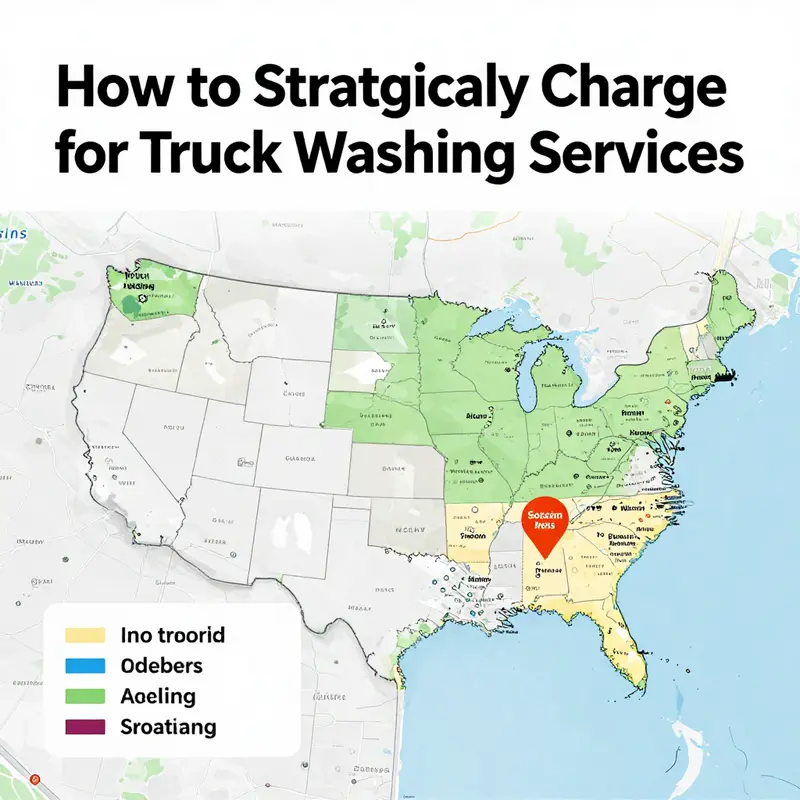
Pricing truck washing is rarely a single, static figure. It behaves like a living map that shifts with the geography of your operation, the local economy, and the needs of fleets that drive the market. When you set prices, you’re not just counting minutes or scraping a margin off a service. You’re negotiating with place—the city block, the industrial park, the rural route, the commute corridor—each demanding a distinct balance of value, cost, and expectation. In this chapter, we explore how to turn location into a rational pricing engine. The goal is not to chase every market fluctuation, but to create a durable framework that reflects real costs, seizes opportunity, and remains fair to customers regardless of where a wash takes place or what kind of vehicle arrives at your bay. Price, after all, is a statement about the distance between what you offer and what the client values enough to pay for it in a given place and time.
To understand location-driven pricing, you first have to appreciate the three core pressures that geography creates. The first is demand. Some places teem with trucks around the clock: distribution hubs, ports, construction sites, and maintenance yards. In those zones, the same wash job may be worth more simply because fleets rely on rapid turnaround and predictable service windows. The second pressure is cost. Rent, utilities, labor, security, and maintenance bills vary from town to town, mile to mile. An operator in an urban center with high real estate costs will pay more to maintain a stall, more to staff a shift, and more to insure a location that accommodates a flood of vehicles. The third pressure is competition. A dense market can drive prices downward as players try to capture volume; a sparsely served region may tolerate higher prices because alternatives are scarce. All three forces—demand, cost, and competition—interact to sculpt a region’s price ceiling and floor. The resulting strategy should fold these realities into a price ladder that aligns with both the business’s profitability and the customer’s willingness to pay.
Service type remains a powerful determinant, but location adds a second axis to the pricing chart. A basic exterior wash accessible in a drive-through lane can be priced safely higher in a metro belt than in a rural pocket where fleet operators must stretch trips to fit tight schedules. When you offer more comprehensive work—the interior detailing, wheel cleaning, undercarriage wash, or waxing—the geographic premium can be even more pronounced, especially in high-demand zones where fleets track maintenance as a core cost of operation. The decision to add mobile services or fixed-location offerings further complicates the math. Mobile washing usually carries a premium to cover travel time, fuel, and the opportunity cost of moving from one site to another. While a fixed facility benefits from economies of scale and the ability to push through higher throughput, it must still account for local property taxes, neighborhood ordinances, and the cost of utilities, all of which differ by neighborhood and city.
A practical way to translate geography into pricing is to think in terms of zones rather than one flat rate. Zone-based pricing acknowledges that a mile matters when a truck must be moved, barriers exist, or traffic patterns alter turnaround times. You can start with a simple framework: a single zone around your shop that captures nearby customers at a base rate, a second zone that accounts for moderate travel distance, and a third zone for farther destinations. As your understanding deepens, you can introduce more granularity—urban cores, suburban corridors, and rural supply routes—each with its own differential. The price differential should reflect measurable costs and observed willingness to pay. In practice, a zone approach helps you balance two aims: keeping the local shop competitive with nearby options and safeguarding profitability when serving fleets that require rapid, reliable service in exchange for marginal per-truck discounts.
Operational costs are the other half of the equation. In global terms, cost structures differ by region. Labor is often the most volatile expense, and wage benchmarks vary with the cost of living, local regulations, and the availability of skilled workers. Utilities—electricity for pumps, water treatment, and waste management—can swing with climate, seasonal demand, and the efficiency of your water recovery system. Insurance and compliance costs rise with neighborhood risk profiles and the complexity of municipal requirements. Even maintenance for equipment and workflow software can differ if a region imposes stricter environmental standards or more rigorous reporting. When you quantify these regional cost differentials, you gain a rational basis for area-based markups. A shop in a high-cost area may justify higher base rates, while a facility in a lower-cost region can price competitively and still preserve margins due to higher volume or favorable throughput.
Competition is often the wild card that makes geography both a risk and an opportunity. In a saturated market, price wars can erode margins quickly. In contrast, underserved areas may reward a more premium pricing approach because customers have limited access to reliable, timely washes. The right move in either case is not to imitate neighbors but to measure what customers are willing to pay for the benefits you uniquely deliver. These benefits include speed, predictability, quality, and the reliability of your scheduling system. If you can promise faster turnaround, consistent quality, and flexible payment terms in a crowded market, you may justify a modest premium that still undercuts local alternatives on total value. Conversely, in a market where customers face fewer satisfactory options, you can protect margins with a stronger premium that reflects the convenience and reduced downtime fleets receive when they partner with you over a longer contract or maintenance cycle.
The method of washing also interacts with location. Touchless systems, soft-touch approaches, and foam-based cleaning each come with different cost signatures and perceived value. In dense urban zones, fleets might favor faster, higher-throughput touchless options even if they carry a slight price premium for paint safety and minimal contact with vehicles. In logistics-heavy areas with large fleets, companies may prioritize a consistent, fleet-wide standard of service over ad hoc pricing, creating room for contract-based models that incorporate volume discounts and service-level guarantees. The point is that the washing method, combined with the location, forms a price envelope—an expected range around which you align your actual quotes. This alignment helps avoid underpricing in high-demand zones or undercutting your own profitability in markets with higher operating costs.
The operational model you choose also shapes pricing strategy. Automated, self-serve, or semi-automated facilities lower labor content and can offer aggressive per-truck price points in high-volume corridors. In those cases, your location determines whether you can push a lower base price and still maintain healthy margins through throughput and ancillary revenue—such as wash add-ons, detailing, or fleet contracting. Conversely, a manually intensive operation in a high-cost, high-demand environment may justify higher prices to cover labor and the cost of premium customer service. The common thread across models is transparency: customers should understand that the price reflects the value they receive in a given place, not a generic one-size-fits-all figure.
How, then, do you implement this location-aware framework in a way that is practical, scalable, and fair to customers? The process starts with data, not instinct. Gather geographic data that maps customer density, demand cycles, and the price points observed in competing facilities across zones. Collect operating-cost data broken down by location, including rent or mortgage, utilities, labor, insurance, and maintenance. Track traffic patterns and travel times to estimate how much extra time a mobile wash adds to a route or a field-site visit. The quality of your data matters because it anchors every pricing decision in reality, not rumor.
With data in hand, you can conduct a market analysis that translates into a concrete pricing ladder. Start by calculating a base rate that covers your average fixed and variable costs per hour, adjusted for the expected volume and the service mix you offer. Then apply zone multipliers that reflect incremental travel costs and the differential willingness to pay in each area. For example, a core urban zone might carry a 15–25 percent premium over the base rate to account for higher rent, tighter labor markets, and greater demand. A suburban zone might add a smaller uplift, perhaps 5–15 percent, while a rural zone could carry little to no multiplier when competition is sparse but may require occasional price adjustments for fuel spikes or seasonal demand shifts.
Dynamic pricing can be a useful tool within a location-based framework, but it should be exercised with discipline. A well-managed dynamic model uses predefined thresholds rather than ad hoc changes. For mobile services, distance-based pricing is intuitive: add a surcharge that covers travel time, fuel, and the wear on equipment. If a truck visits a site 30 miles away, you price the service to include the extra logistical cost rather than pricing purely on the wash itself. The goal is to preserve a predictable baseline for your core service while providing transparent, fair adjustments for geography and mobility. You might also incorporate seasonality—peak seasons, such as harvest periods or pre-holiday inventory cycles—where demand rises and the market tolerates higher pricing. Fleets that plan ahead and book in advance can receive predictable rates, building trust and volume that compounds into steadier revenue.
To operationalize these ideas, consider integrating pricing software that can support area differential pricing and zone-based pricing. A centralized pricing engine helps you adjust zone multipliers, apply travel surcharges, and run scenario analyses quickly. The advantage of software is that it reduces human error, speeds up quoting, and documents the rationale behind each price. When a sales or operations team member quotes a mobile service, the system can automatically factor in the customer location, service type, vehicle size, and travel distance to produce a price that is both competitive and profitable. This eliminates the temptation to rely on memory or back-of-the-envelope calculations, which can undermine both consistency and credibility with fleets.
Beyond the numbers, there is a human element to location-based pricing that deserves attention. Fleets are increasingly sensitive to predictability and partnership. In high-demand urban zones, programmatic pricing supported by contracts and service-level guarantees can deliver the reliability fleets require. In other areas, offering volume discounts or bundled services—such as periodic undercarriage cleanings paired with routine exterior washes—can convert one-off customers into recurring clients. The key is to communicate clearly how prices are determined and to honor the framework you present. When customers understand that a location-based scheme exists to reflect real costs and value, they perceive fairness and transparency, which strengthens loyalty over the long run.
From a practical standpoint, you should consider a few operational inclusions that reinforce your location strategy without complicating the customer experience. First, ensure your facility management practices support consistent service across zones. This includes maintaining wash bays, water treatment and recycling systems, and a scheduling workflow that minimizes wait times for customers regardless of where they are located. You can explore best practices for facility management for truck wash businesses to align front-end pricing with back-end operations, ensuring that the price tag matches the performance delivered at the dock or on-site. facility management for truck wash businesses
Second, communicate any distance-based or zone-based charges clearly in written quotes and on estimates. The pricing policy should be accessible, with examples showing how zone multipliers apply and how travel surcharges are calculated. A transparent approach reduces friction and fosters trust, particularly when a fleet shifts its routes or adds a new terminal in a different zone. Third, maintain a feedback loop. Track the profitability and customer satisfaction of each zone and adjust multipliers or service offerings as markets evolve. This iterative approach keeps pricing aligned with reality rather than letting it drift out of step with costs and customer expectations. Finally, document your decisions as part of a formal pricing protocol. A written framework helps new staff understand the logic behind zone decisions and helps managers justify rate changes to customers who may raise questions during renewals or contract negotiations.
The broader economics of geographic pricing are not unique to truck washing. The same principles apply across many service businesses that operate across multiple locales with varying costs and demand patterns. The discipline is to couple rigorous data collection with disciplined analysis, then translate insights into a simple, scalable pricing model. If you can do that, location ceases to be a vulnerability and becomes a lever. Your shop in a bustling corridor can charge a competitive premium while maintaining volume, and your rural site can sustain a stable price that reflects its cost structure while offering dependable service in a market with fewer alternatives.
To broaden your understanding of geographic pricing beyond the trucking wash context, consider exploring the geographic pricing framework used in other industries. The general idea is to model prices as a function of location and cost realities, then apply that model consistently across the business. This approach helps ensure that every quote reflects the same underlying logic, producing fair outcomes for customers and healthy margins for operators. For readers seeking a broader framework, there is a helpful discussion on how geographic pricing can be applied in practice in a reputable industry resource. The article outlines how data and zone differentials can be deployed in real-world pricing decisions, providing a useful reference point as you refine your own model.
In summary, location-based pricing for truck washing is not about slapping a higher tag on every job in the city, nor is it about squeezing every penny from a single client. It is about aligning value with place. It requires honest accounting of local costs, an understanding of demand, and a thoughtful approach to competition. It demands a pricing structure that is simple enough to communicate and robust enough to withstand market shifts. And it benefits from integrating operations and pricing into a single, coherent system—one that treats location as a strategic asset rather than a logistical inconvenience. When you frame pricing around geography in this way, you create a resilient business model that serves fleets reliably, sustains margins, and communicates clear value to customers who depend on predictable service wherever their routes take them. For operators who want to see this philosophy in practice, investing in the operational and analytical capabilities to support location-based pricing is a wise step—one that translates geographic reality into commercial strength and steadier growth over time.
External resource for broader context: For a broader framework on geographic pricing, see the discussion on how to use geographic pricing in industry contexts: https://www.netsuite.com/portal/blog/2025/08/how-to-use-geographic-pricing.shtml
Final thoughts
In summary, establishing a solid pricing structure for truck washing services requires a keen understanding of service types, vehicle sizes, methods, and local market conditions. Fleet managers and trucking company owners can enhance profitability by employing a strategic approach that considers all these factors. By ensuring pricing models are aligned with operational costs and customer expectations, companies can deliver quality services while maintaining their competitive edge.