
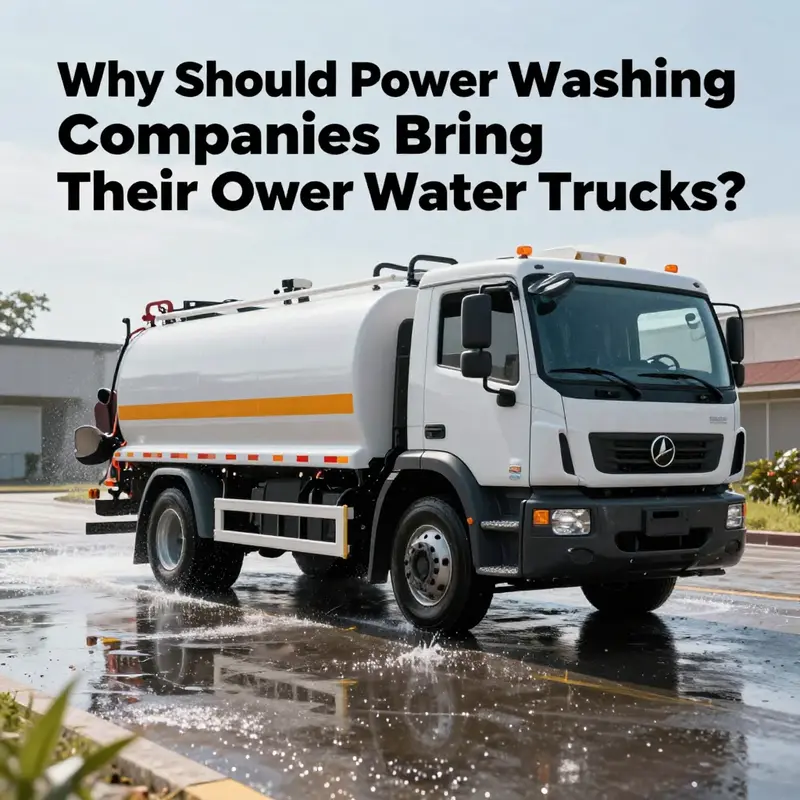
Power washing is essential for maintaining the cleanliness and integrity of various surfaces, especially in industries that rely on logistics and construction. A critical question arises: should professional power washing companies bring their own water trucks? This article delves into five pivotal factors—the quality of water and pressure requirements, the convenience and efficiency of independent operations, the significance of hygiene and safety, the environmental responsibilities associated with power washing, and the professionalism that dedicated water trucks embody. Each chapter contributes to a holistic understanding of why providing their own water source is not just beneficial but essential for power washing companies serving logistics, trucking, construction, and mining sectors.
The Value of a Dedicated Water Truck in Power Washing
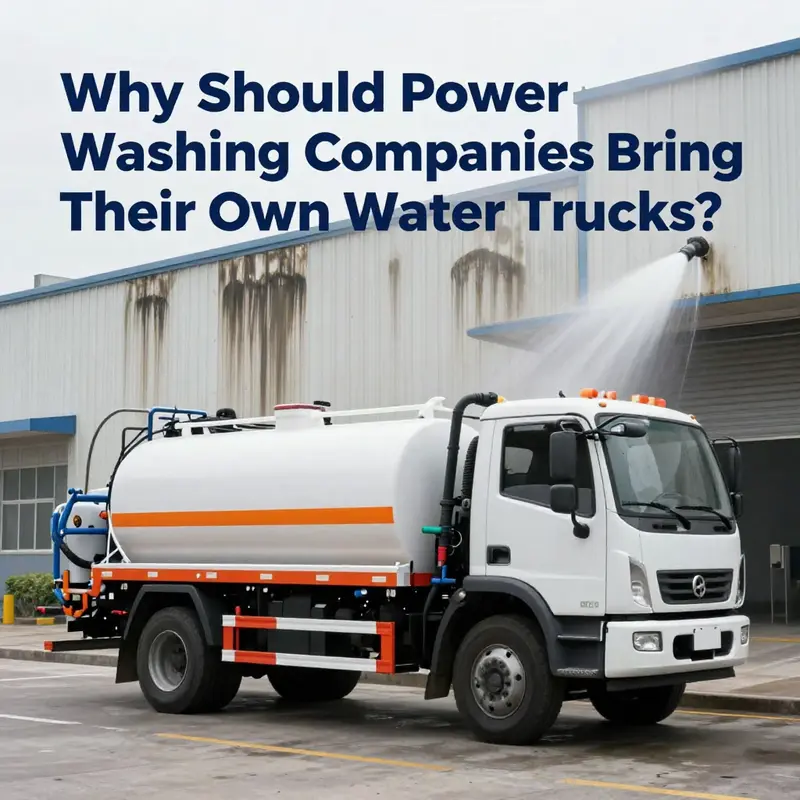
In professional power washing, water quality and availability are not afterthoughts but core drivers of results. A water truck gives the crew control over pressure and flow, reduces on site delays, and supports safety and environmental responsibility. With own supply, the team can maintain consistent cleaning across municipal restrictions and varying tap quality. Filtration and sediment control protect pumps and surfaces, while on site containment minimizes runoff. For residential properties, it enables faster scheduling and less nuisance during peak hours. For commercial jobs, it sustains uptime for long passes, improves uniformity, and lowers risk of damage from inconsistent water. The ability to plan around water helps client communication and project planning. Regulatory compliance is simpler when the operator can show proper containment and disposal of wash water. A truck mounted system also signals professionalism and preparedness, which can influence buyer trust. In sum, owning and operating a dedicated water supply aligns with quality, reliability, and accountability in the cleaning process.
On-Demand Water, On-Time Results: The Case for Power Washing Companies Bringing Their Own Water Truck
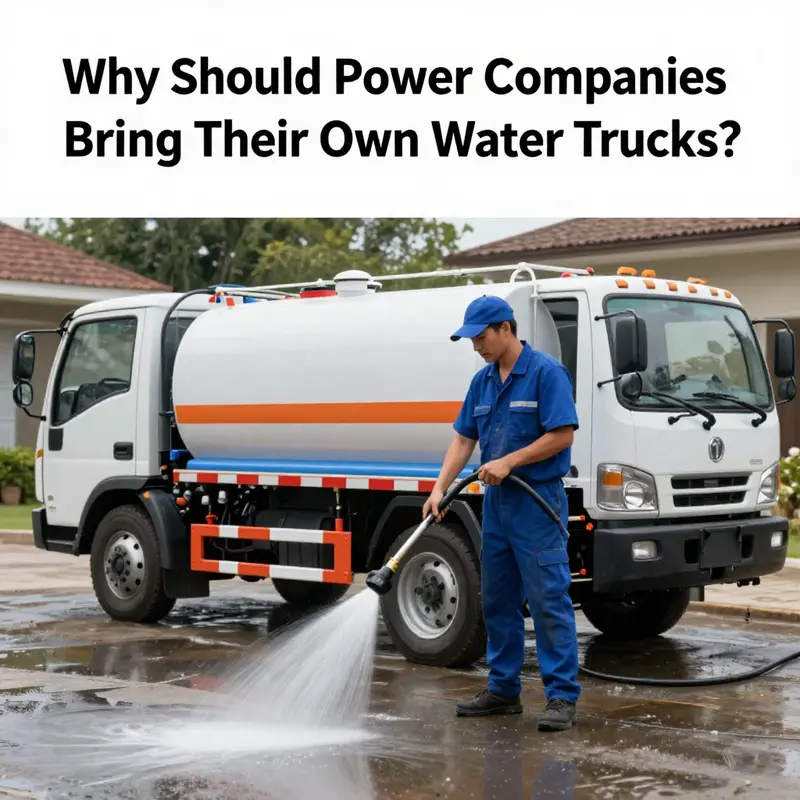
A power washing job is never just about blasting soap and grime away. It hinges on the one resource that dictates whether the results are passable or pristine: water. The decision for a power washing company to bring its own water truck is more than a logistical preference; it’s a strategic stance on quality, reliability, and customer peace of mind. When a crew arrives with a mobile water supply, they signal readiness to deliver consistent, high-quality cleaning from the first prod of the wand to the final rinse. They also reduce the friction that often accompanies external water dependencies, which can prove costly in both time and outcomes. The rationale rests on several interconnected pillars: self-sufficiency, speed, uninterrupted operation, performance, and customer convenience, all underpinned by hygiene, safety, and environmental stewardship. Taken together, these factors shape a compelling case for why bringing a water truck is not merely convenient but essential for professional power washing at a high standard.
First, self-sufficiency matters. Many job sites sit far from municipal hydrants or rural water lines, or they sit in locations where access is limited by schedule, zoning, or event traffic. A dedicated water truck removes the dependence on the client’s water source, ensuring the crew can begin without delay and proceed without the creeping anxiety of whether water will show up when needed. This is especially valuable in remote or underserved areas where infrastructure gaps can surface at critical moments. The ability to source water on-site converts a potentially reactive service into a proactive one. It allows crews to plan with certainty, map out their workflow, and maintain momentum from arrival through completion. The result is less idle time and more continuous cleaning, which translates into shorter overall project timelines and a more predictable schedule for both the contractor and the client.
Setup is another area where on-site water supply yields tangible gains. When a team can pull water from a truck, they bypass the choreography of coordinating with property owners or managers to locate hoses, confirm pressure, or secure access to a water source that may not even exist on the property. Faster setup means more time spent actually cleaning rather than hunting for water. On a busy workday, even minutes saved can compound into hours saved across multiple jobs. The practical implication is straightforward: with a water truck, a crew can launch into the toughest cleaning tasks more quickly, which is especially important for commercial properties with tight access windows or multi-site portfolios where time tightly maps to cost and client satisfaction.
Uninterrupted cleaning operations are the third core benefit. Municipal restrictions, temporary outages, or local water usage limits can stall a project and force a schedule rethink. A mobile water supply helps a contractor avoid those interruptions. It provides a buffer against external fluctuations in water availability, and it keeps the operation on track even when the local supply is strained. The ability to maintain a steady flow of water—both in pressure and volume—helps sustain consistent cleaning performance. In high-pressure applications, fluctuations in water supply can compromise results or require frequent pauses to adjust equipment. With a dedicated truck, the crew preserves the system’s rhythm, delivering reliable outcomes that clients can count on.
Speaking of performance, the fourth benefit centers on the quality of cleaning itself. Commercial-grade water trucks are not just containers; they are integrated systems designed to sustain high pressure and ample volume. Consistent flow sustains consistent cleaning power, which matters when tackling stubborn dirt, grease, or set-in grime on industrial equipment, storefronts, or exterior surfaces that bear heavy weathering. The water supply interacts with the pressure washer and nozzle selection to determine the finish. A well-equipped truck can also incorporate filtration and treatment measures to reduce particulates and to manage contaminants that might otherwise compromise the cleaning process or damage sensitive substrates. In this sense, the water truck becomes a platform for professional-grade results rather than a mere supply line.
Hygiene and safety sit closely beside performance. The source water quality matters because it has downstream effects on surface cleanliness and on the safety of workers and occupants. A truck-based system can be configured to provide filtered water or to blend detergents at controlled concentrations, ensuring that chemical use remains within recommended safety limits. Clean water reduces the risk of introducing impurities that could mar surfaces or create unexpected reactions with cleaning agents. Moreover, by controlling the water source, crews can better manage runoff and minimize the introduction of contaminants into surrounding soils or drainage systems. This is not just about compliance; it’s about responsible practice that protects clients, employees, and the environment.
Environmental responsibility threads through every decision a reputable company makes, and the water truck is a clear statement of intent. Modern power washing operations increasingly emphasize filtration, containment, and responsible disposal of soapy runoff. A well-designed on-site water system can include filtration to reduce solids and impurities before water returns to the environment, and it can deploy containment strategies to capture dirty runoff for proper treatment. When a company assumes responsibility for its water source, it also accepts responsibility for the lifecycle of the cleaning process—from water intake to effluent management. This approach aligns with broader expectations about sustainability in the service sector and can become a differentiator for clients who value environmental stewardship as much as efficacy.
Professionalism and preparedness, the final threads in this tapestry, are reinforced by the practical realities of bringing a water truck. A company that arrives with the means to self-supply projects signals reliability and preparedness that clients can trust. It communicates that the team has planned for contingencies, understood site-specific constraints, and invested in the infrastructure necessary to deliver consistent, high-quality results regardless of location or circumstance. That image—one of readiness and capability—contributes to a sense of security for clients who are often balancing budgets, schedules, and expectations about outcomes. Customers are more likely to choose a service that appears self-contained and capable of meeting deadlines without dependence on external variables that can derail a project.
The benefits described here reframe the decision to bring a water truck as part of a broader operating philosophy. It is not simply about having extra equipment; it is about designing a service model that prioritizes speed, consistency, and accountability. The advantages extend beyond the surface level of convenience. They touch on core business health: faster mobilization, reduced risk of delays, higher-quality results, stronger compliance with safety and environmental standards, and a professional image that resonates with property managers, facility owners, and fleet operators. The practical impact on customer experience is evident. Clients gain certainty about scheduling, a transparent expectation of results, and a cleaner, safer site without the logistical headache of securing water access. In a competitive market, this level of reliability can be the deciding factor for customers who manage complex sites with multiple stakeholders and high cleanliness standards.
For readers seeking a touchstone on how this approach fits into the wider world of truck-centric cleaning operations, consider the broader dialogue around facility management and fleet-wide efficiency. The link between a well-managed water supply and an efficient, accountable service is not incidental; it is foundational. A practical reference on how operations scale when water logistics are integrated into the core service model can be found in resources that discuss facility management for truck wash businesses, offering actionable perspectives on aligning water logistics with broader fleet and site management goals. facility management for truck wash businesses.
To round out the discussion, it helps to view the concept against external insights that corroborate why water trucks matter. Industry analyses and practical guides highlight that dependable on-site water sources empower crews to maintain pressure, volume, and delivery timing—elements that directly influence cleaning outcomes and client satisfaction. A widely referenced perspective emphasizes choosing partners who can provide a water truck as a hallmark of professionalism and operational discipline. For readers seeking a concise external perspective, the following resource offers a clear articulation of the value proposition: https://www.powerwashingpros.com/why-choose-a-power-washing-company-with-a-water-truck. This external reference supports the cottage industry view that water on-site translates into measurable advantages in performance, efficiency, and reliability, reinforcing the case for on-site water supply as a standard practice rather than a niche preference.
Clean Water, Clear Standards: Why Power Washing Teams Should Travel with Their Own Water Trucks
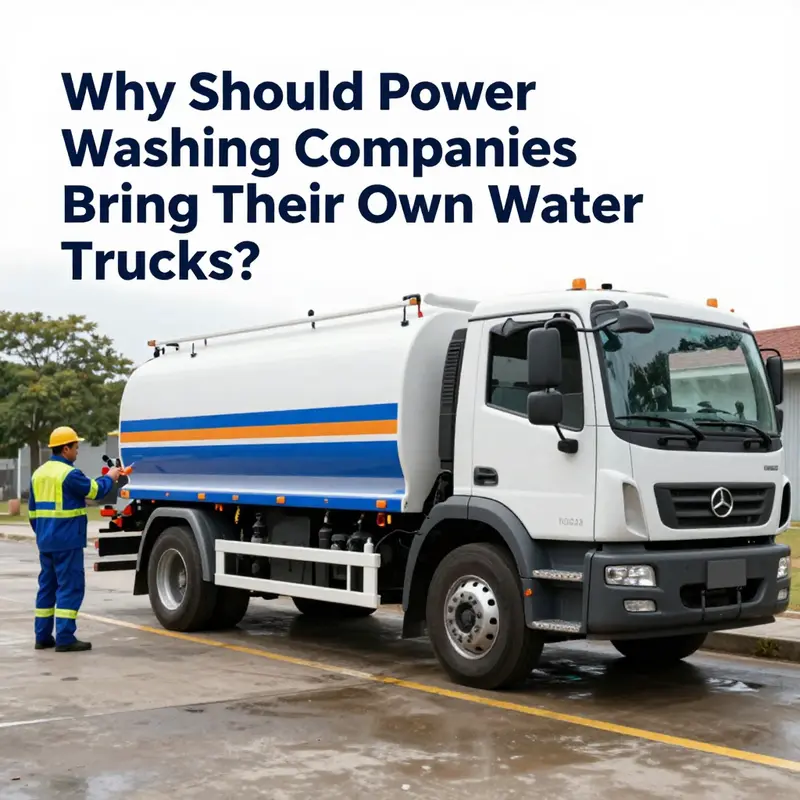
On sites of every size and exposure, from bustling malls to industrial campuses, the cleanliness of pavements and building exteriors is more than a matter of appearance. It is a public health and safety issue, intertwined with the spread of grime, grease, and potential contaminants. In this context, the decision for a power washing company to bring its own water truck is not a luxury but a core operational standard. A dedicated water supply, delivered through a purpose-built truck, creates a predictable, controllable process that uplifts hygiene and safety for workers, clients, and passersby. It also redefines what reliability looks like in field service, turning the concept of readiness from a nice-to-have into a nonnegotiable asset that underpins professional credibility. When teams arrive with a mobile water source, they signal capacity and discipline—traits clients increasingly equate with trustworthy service and long-term partnerships. The ability to control water volume and pressure from the truck ensures surfaces receive consistent treatment, regardless of the variances that might plague a municipal or household supply. In essence, the water truck becomes a moving node of reliability, a facility on wheels that keeps the operation from stalling while the team does the work that matters most: restoration and sanitation at scale.
Water quality and pressure sit at the heart of effective power washing. High-pressure streams are not just a matter of brute force; they are a controlled tool designed to dislodge stubborn grease, oil, tire marks, and accumulated biological matter without unduly harming the substrate. Municipal supplies, while convenient, can fluctuate in pressure, mineral content, or residual treatment that affects cleaning results. A dedicated water truck is engineered to maintain a steady pressure and a steady supply, preserving the integrity of the cleaning process across hours of work and across large surfaces. This consistency translates directly into hygiene gains. When a surface is washed with predictable water flow, there is less need for rework, less opportunity for missed spots, and less chance of leaving behind residues that could become a slip hazard or harbor bacteria. The reliability of the flow also reduces risk to workers, because operators can anticipate nozzle performance and maneuver around obstacles with confidence rather than adapting to sudden changes in water availability.
Convenience and efficiency go hand in hand with autonomy on the job site. A power washing crew that rolls in with its own water source can begin work immediately, without the waiting period that often accompanies connection to a client’s water system or the search for a nearby hydrant. This autonomy reduces downtime and improves scheduling accuracy, which matters when time is money and when multiple sites depend on a single crew’s movements. It also diminishes the risk of miscommunication about water access. When the team controls the water supply, they are not negotiating permissions or coordinating third-party access mid-cleaning, which can fracture timelines and complicate site protocols. For clients, this translates into predictability: a clearly defined workflow, clearer budgets, and fewer disruptions to their daily operations. From the crew’s perspective, the truck creates a self-contained work envelope, in which equipment, water, and filtration operate in tandem, minimizing the need for on-site improvisation and maximizing focus on the task at hand.
Hygiene and safety extend beyond the visible cleanliness of a surface. Dedicated water trucks help prevent contamination from unfiltered or untreated sources and support compliance with local water usage and runoff regulations. On many job sites, runoff capture and proper disposal of wastewater are not merely best practices; they are legal requirements designed to protect environmental and public health. A truck outfitted with filtration or purification components can reduce suspended solids and minimize chemical carryover, supporting safer, cleaner discharges and less environmental impact. These features matter especially when cleaning commercial properties and industrial facilities where runoff volumes can be substantial and where the presence of detergents or solvents demands careful handling. Fire hydrant connectors, a standard feature on many water trucks, enable rapid, direct access to municipal water supplies when needed, maintaining uninterrupted flow during peak cleaning periods. This capability prevents the team from dipping in and out of tanks, which can disrupt pressure stability and reduce efficiency. For operations that prioritize compliance and responsible stewardship, the combination of steady flow, filtration, and rapid water access is a technical safeguard that aligns with high hygiene standards and responsible environmental management.
From a safety standpoint, the argument for owning a water truck strengthens further when considering slip hazards and pedestrian safety on active sites. Large cleaning operations can generate significant water runoff and soap residues that, if not controlled, create slick patches and risk of injury for workers and clients. A dedicated water truck supports site safety by enabling controlled rinsing, reducing mud and standing water, and ensuring that soap concentrates are managed in a way that minimizes exposure to passersby and workers alike. In the big-picture sense, the truck acts as a mobile safety program—an extension of site management that reinforces disciplined operating procedures, proper PPE use, and careful traffic management around cleaning zones.
Environmental responsibility remains a guiding principle for reputable power washing professionals. When a team relies on a water truck, they can implement filtration, capture, and recycling practices that curb water waste and lessen environmental disturbance. Modern trucks can be equipped with filtration systems that remove particulates before water is discharged, and with systems to direct runoff toward approved containment areas. The environmental calculus is straightforward: the more water you can treat and reuse, the smaller your ecological footprint. This is not just good ethics; it is smart risk management. By demonstrating a commitment to environmental stewardship, a company strengthens its appeal to property managers, municipal clients, and corporate decision-makers who increasingly demand sustainable contracting practices. The emphasis on filtration and responsible runoff handling also aligns with broader industry expectations for compliance and transparency in how services impact local ecosystems. The result is a service that cleans more effectively while preserving watersheds and urban runoff quality, an outcome that resonates on every level with clients who care about health, safety, and the environment.
Professionalism and preparedness are the subtle but powerful underpinnings of a water-truck-equipped operation. Bringing their own water supply signals to clients that the team has planned for contingencies, calibrated equipment, and the resources to handle unexpected challenges without compromising results. This level of preparedness translates into trust. When a crew arrives with a fully provisioned truck, clients perceive dependability and a commitment to finish the job on time and on budget. That perception matters as much as the actual cleaning performance, because it shapes ongoing relationships and referrals in a market where contractors compete on reliability as much as on technical skill. It is also worth noting that a well-prepared fleet—of which a clean water truck is a critical element—often reflects broader standards: standardized equipment configurations, routine maintenance schedules, and documented safety procedures. These are the markers of a mature service capable of managing complex sites, coordinating with facility managers, and navigating the unique demands of industrial cleaning without friction.
To employers and managers evaluating proposals, the question of whether a power washing company should come with its own water truck often becomes a proxy for broader capabilities. It implies a supplier who can scale, plan, and execute in ways that minimize risk to people and property while maximizing cleanliness outcomes. It is not merely about speed or brute force; it is about a disciplined approach to resource management, water stewardship, and site safety. For organizations that manage large campuses or operate facilities with sensitive public-facing spaces, the decision to partner with a water-truck-equipped crew can translate into fewer interruptions for tenants, reduced regulatory exposure, and clearer lines of accountability. It is a choice that aligns with the evolving expectations of facility management, where contractors are assessed not only on the quality of the wash but on the robustness of their logistics, their environmental footprint, and their adherence to safety protocols.
In exploring the broader implications, it is helpful to connect this discussion with established standards of fleet readiness and emergency responsiveness. A chapter of practice, such as fleet-standardization-emergency-response, provides a framework that supports disciplined deployment, rapid mobilization, and systematic risk management across cleaning projects. Integrating such standards with the operational realities of a water truck yields an approach to power washing that is neither ad hoc nor reactionary. Instead, it is a deliberate alignment of equipment, water management, and human capital around a common objective: delivering hygienic, safe, and environmentally conscientious cleaning services on time and within scope. Within this integrated approach, the water truck remains more than a source of liquid; it becomes a symbol of the company’s promise to show up prepared, whether the site calls for routine maintenance, post-construction cleanup, or large-scale sanitation campaigns. For readers seeking concrete exploration of these themes, see the broader discussions on fleet readiness and emergency response in related materials.
For readers who want to dive deeper into the technical landscape of these machines, a useful external reference provides insight into the capabilities and configurations of high-pressure road cleaning water spray trucks. This resource outlines how water pressure, pump power, filtration, and water handling come together in a way that supports both high performance and responsible operation: https://www.dongfengtruck.com/product/high-pressure-road-cleaning-water-spray-truck.html. On the internal side, practitioners who want to align with best practices can look at the linked guidance on fleet standardization and emergency response to ensure that their water-hauling operations are integrated with broader health and safety standards on the job.
In sum, the decision for a power washing company to bring its own water truck is a strategic choice that reinforces hygiene, safety, efficiency, and environmental accountability. It signals readiness, supports consistent cleaning outcomes, and underpins the trust essential to successful long-term client relationships. By investing in water-truck capability, a company does more than guarantee a robust supply of water; it anchors a professional identity centered on reliability, responsibility, and rigorous adherence to safety standards. As markets increasingly reward contractors who manage risk effectively and operate with clear governance, the water truck stands as a practical embodiment of those commitments—an asset that translates operating strength into measurable, real-world benefits for clients and communities alike.
null
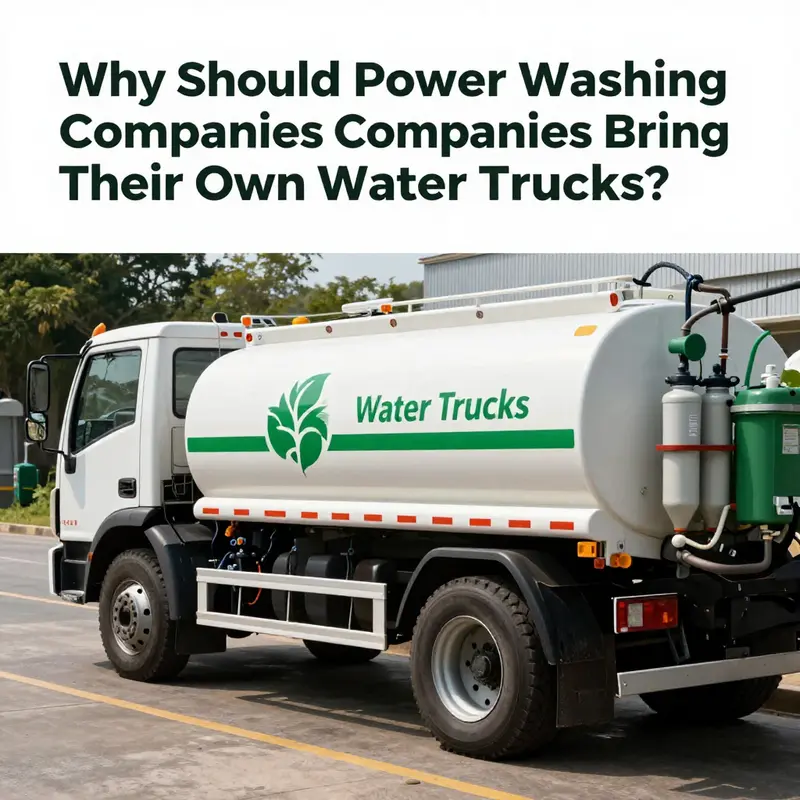
null
Carrying the Water, Carrying the Standard: Why a Power Washing Team Should Roll Up with Its Own Water Truck
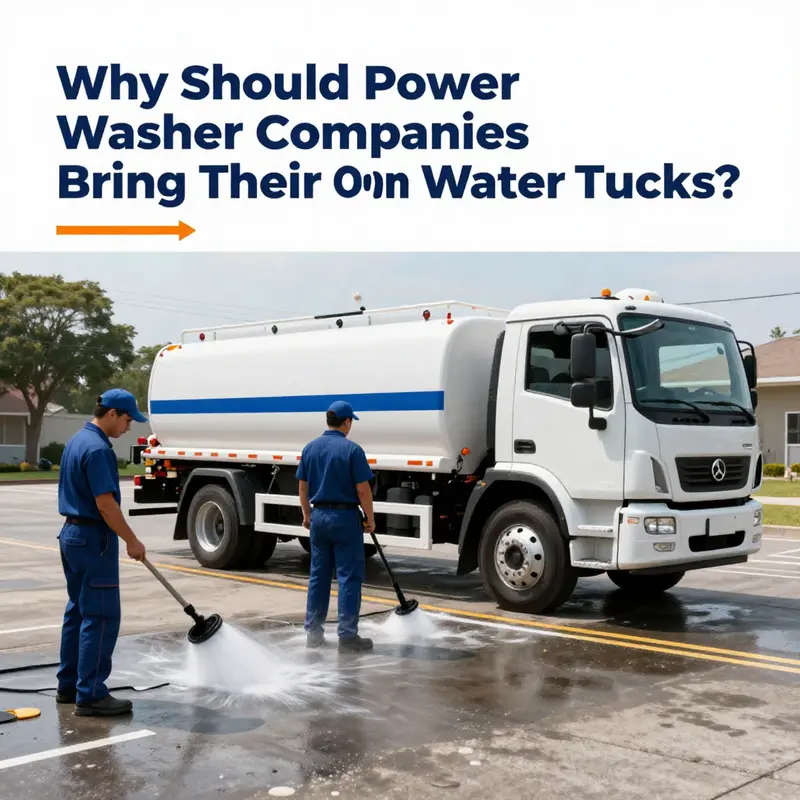
The decision for a power washing company to bring its own water supply is more than a logistical choice; it is a declaration of professional standard and operational intent. In a field where results hinge on the relentless spray and the precise balance of pressure, volume, and dwell time, water is not merely a resource—it is the medium through which a crew translates equipment capability into visible, measurable outcomes. Relying on a client’s tap or a municipal supply introduces variables that can undermine consistency: fluctuating pressure, delayed access, and the risk of compromised workflow when water is scarce or unavailable. By choosing to deploy a dedicated water truck, a company signals confidence in its own process, rehearsal of its crew, and a commitment to delivering reliable results on any site, regardless of infrastructure gaps or seasonal constraints. This stance resonates beyond the mechanics of cleaning; it embodies a professional ethos that clients notice—an ethos built on preparedness, reliability, and a clear understanding of the job’s requirements from the first site assessment to the final rinse. The water truck, in this light, becomes more than equipment. It is a moving statement of competence, control, and accountability in a business that must often improvise under pressure while still achieving a meticulous finish.
Quality and consistency sit at the heart of this practice. High-pressure cleaning demanded by commercial and industrial properties can demand large volumes of water at steady pressures. Municipal supplies, especially during droughts or peak business hours, may struggle to maintain the rate of flow needed for efficient cleaning. A dedicated water truck eliminates that variable. It ensures that the crew can sustain the required pressure and velocity without waiting for a municipal hydrant to refill or a client’s internal system to stabilize. The certainty of water volume directly translates to the ability to plan work sequences, allocate the correct nozzle selection, and maintain the cadence that commercial projects expect. When a project manager can forecast how long a job will take because the water source is dependable, it reduces idle time, minimizes interruption to surrounding operations, and strengthens the trust clients place in the team’s scheduling discipline.
Water quality is another pivotal consideration. Not all water is created equal, and the quality of the input has downstream effects on surface cleanliness, equipment wear, and the ultimate appearance of the finished surface. A water truck equipped with filtration or treatment processes can filter particulates and adjust salinity where necessary, reducing the risk of staining or scaling on sensitive surfaces. It also helps prevent the introduction of contaminants that could complicate post-cleaning inspections or leave residues that require rework. In practice, this means crews can tailor the water treatment approach to a site—whether it’s a limestone facade that demands gentle rinsing or a highly soiled industrial coating that benefits from a carefully managed rinse cycle. To clients, these details read as professionalism: a team that thinks through water quality as a core variable, not a afterthought.
The convenience of independent water access offers a level of operational efficiency that resonates with customers who manage tight timelines and complex site constraints. A water truck enables crews to work without recurring dependencies on client facilities or third-party water suppliers. It allows the team to schedule around access restrictions, such as building hours, loading dock availability, or site-specific safety windows, without chasing water delivery. This degree of autonomy reduces the risk of delays that can cascade into overtime costs, rescheduled appointments, or friction with site managers who already juggle multiple trades. In a service economy where reputations are built on punctuality and predictability, showing up with a fully provisioned water unit sends a clear message: this company does not wait for water to find them; it brings the water to the job.
Beyond speed and reliability, there is also a hygiene and safety dimension to owning a water truck. On many sites, contaminated water sources or unknown water quality can pose health and safety concerns for workers, as well as regulatory risk for the project owner. A dedicated truck, designed for on-site storage, filtration, and controlled discharge, can help minimize cross-contamination and ensure that runoff water is managed in a compliant manner. This is especially important on larger properties or in industries with strict environmental controls. When the crew can rinse equipment and wash down areas using water that has been selected and treated for the task, it mitigates the chance that dirty, untreated water is introduced into clean zones or drainage systems. The result is a safer work environment and a cleaner site footprint, which in turn reduces the likelihood of regulatory scrutiny or neighborhood complaints—factors that can disrupt schedules and erode trust.
Environmental responsibility often emerges as a practical concern rather than a marketing talking point. Reputable operators recognize that the ecological impact of wash water—the soapy runoff, the oils and greases, the residues left on pavements—must be managed with care. A modern water truck often comes with filtration and containment strategies designed to minimize environmental impact. These systems can capture or treat runoff before it leaves the site, reducing the risk of contaminants entering storm drains or watercourses. The emphasis on responsible water use aligns with broader industry expectations about sustainability and community stewardship. When clients see a team arrive with a purpose-built vehicle that includes filtration or containment measures, they gain confidence that the operator has not only technical prowess but also a mature appreciation for responsible practice.
Professionalism and preparedness are perhaps the most visible benefits. A crew that arrives with a water truck projects certainty and readiness. It signals that the company has anticipated site logistics, understood the potential constraints of the work, and invested in equipment that keeps crews focused on the task rather than chasing water. This level of preparedness extends to safety protocols, equipment maintenance, and crew training. A water truck is a mobile workshop—holding not just water, but the consumables, spare parts, and filtration components that keep a job on track through the inevitable hiccups of field service. The professional image this conveys matters. It is not merely about looking competent; it is about showing up with a plan, having the capacity to execute it, and delivering results with minimal disruption to client operations. Clients notice when a contractor prioritizes readiness, and that perception often translates into repeat business and referrals.
Investing in a water truck is, in essence, a strategic commitment. It is a tangible asset that underpins service continuity, supports consistent outcomes across a portfolio of sites, and reinforces the contractor’s claim to be a reliable partner rather than a reactive service provider. For large-scale commercial properties, industrial facilities, or remote rural sites, the ability to guarantee water access and pressure can be the deciding factor between a project that proceeds on time and one that stalls while a water source is located or negotiated. The investment is not just in hardware; it is in the systems, people, and routines that make the service repeatable and scalable. A company that treats water access as a core capability—integrated into planning, logistics, and safety—positions itself to outperform competitors who rely on ad hoc arrangements or client-driven compromises.
For readers seeking practical guidance on fleet readiness and how to embed this capability into a service model, consider exploring best practices in facility management for truck wash businesses, which emphasizes fleet readiness, site coordination, and continuity planning. See Facility management for truck wash businesses for a framework that aligns with the standards described here. These practices, when reflected in weekly schedules, maintenance routines, and on-site safety rehearsals, strengthen the case for bringing your own water—and the accompanying standards—to every job. As one industry observer notes, the best crews treat water as a controllable resource rather than a variable. They plan, prepare, and perform with the same discipline they bring to any other core capability. That discipline is what turns a competent cleaning service into a trusted partner.
External reference and further context can be found in established equipment and service standards that inform water management and efficiency on modern cleaning operations. For a broader technical frame on industry best practices, see this external resource: https://www.karcherpro.com/.
In sum, choosing to bring a water truck embodies professionalism and preparedness in a way that other conveniences do not. It anchors reliability, supports consistent outcomes, and reinforces a responsible, safety-forward approach to field service. It is a strategic decision with tangible operational payoffs, especially when sites are challenging, water quality is uncertain, or schedules demand unwavering consistency. The water truck is not merely equipment; it is a commitment to doing the work right, on time, every time.
Final thoughts
In conclusion, the necessity for professional power washing companies to bring their own water trucks is clear. The advantages range from ensuring optimal water quality and pressure to enhancing convenience and operational efficiency, while also prioritizing hygiene, safety, and environmental responsibility. Furthermore, the professionalism exhibited by companies that are fully equipped reinforces the reliability clients seek in service providers. By investing in their own water trucks, power washing companies not only enhance their operational capabilities but also uphold the highest standards of service quality.