
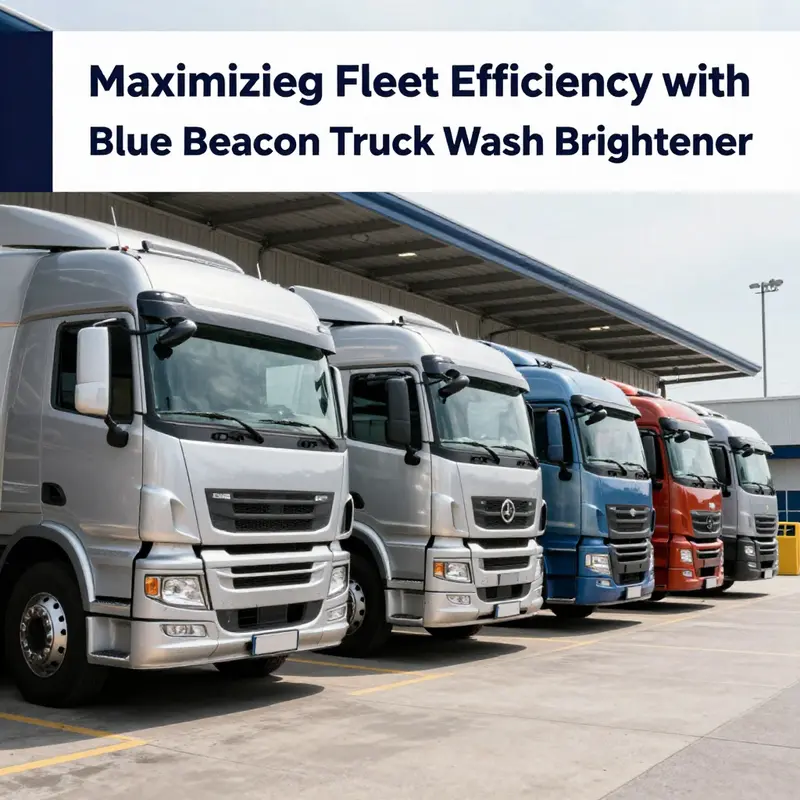
Effective fleet maintenance is vital for logistics and freight company managers, trucking company owners and operators, and construction and mining fleet supervisors. One of the key elements in maintaining a fleet’s aesthetic and operational efficiency is ensuring that vehicles remain clean and presentable. The Blue Beacon Truck Wash Brightener is designed specifically for high-pressure truck wash systems, significantly enhancing the cleaning performance to tackle tough grime and road film on commercial trucks. This article delves into the composition of Blue Beacon Truck Wash Brightener, proper application techniques, safety considerations, and the myriad benefits it offers to fleet managers. Understanding these aspects can significantly contribute to maintaining the appearance and longevity of fleet vehicles.
Brighteners in Truck Washes: Function, Composition, and Practical Use

In modern fleet wash systems a blue dyed brightener serves as more than color. It lowers surface tension, loosens road film, and helps surfaces dry with fewer streaks. The formulation hinges on surfactants, solvents, chelants, and performance additives, all balanced to work with high pressure water and precise dosing. Surfactants reduce surface tension, enabling water to spread and penetrate soils; color cues help operators verify distribution. Solvents soften oily residues; chelants scavenge minerals from hard water, preserving cleaning power; small amounts of builders, polymers, and anti-foam stabilize performance and aid sheeting during rinse. The exact recipe is proprietary, but public literature and SDS documents describe general function and safety requirements. The color feature is part of process control in automated lines, guiding maintenance of dilution ratios, flow, and nozzle cleanliness. In practice, successful use depends on aligning chemistry with the wash hardware, water quality, and fleet soil profile, along with training and procedures to manage exposure and waste. When selecting brighteners, fleets consider compatibility with metals and coatings, regulatory constraints on surfactants or phosphates, and overall environmental responsibility. Operationally, ensure regular calibration of pumps, verify dilution at the start of shifts, inspect spray nozzles, and monitor rinse water clarity. For readers seeking deeper technical or safety guidance, consult the SDS and manufacturer technical notes; these documents spell hazards, PPE needs, and safe handling, storage, and disposal. Related resources on soil removal and glassy sheens can help translate chemistry into day to day gains, while practical fleet guides provide concrete steps for typical soils like diesel residues or tar. In sum, the brightener is a system component: its chemistry must be integrated with equipment, water quality, and workflows to deliver consistent cleanliness and efficient throughput.
Blue-Tinted Brighteners in Truck Washes: Achieving Consistent, High-Gloss Clean Across a Fleet

A brightener used in truck wash systems is more than just a splash of color in the rinse cycle. It is part of a carefully engineered cleaning sequence designed to break up road film, oily residues, and mineral deposits that build up on large fleet vehicles over thousands of miles. In practice, these brighteners are formulated to work with high-pressure water and chemical dispensing to lift and emulsify stubborn grime, improvecontact angles on a variety of surfaces, and leave a more uniform, more visually appealing finish once the final rinse passes. The color, often a vivid blue, serves as a practical visual cue for operators—to gauge distribution, monitor concentration, and confirm that the wash solution is flowing through the system as intended. It is not merely cosmetic; it is a functional marker that helps maintain process consistency across shifts and different wash bays, especially in automated or semi-automated facilities where the operator’s eye is the first line of quality control.
To understand how a blue-tinted brightener integrates into a wash line, it helps to picture the broader chemistry of a modern truck wash. A typical cycle begins with a high-volume pre-rinse that knocks loose surface grime and road film. That initial water jet is followed by a detergent stage in which surfactants and emulsifiers begin to soften and suspend the stubborn deposits that cling to metal, rubber, and painted surfaces. The brightener then follows in a mid-stage dosing, designed to enhance the detergency of the wash and to prime surfaces for a clean, dry finish. The brightener’s role is twofold: it improves the removal of residues by reducing surface tension and it helps the subsequent rinse stage sheet water more evenly, reducing streaks and water spots. In fleet contexts, this combination translates into more consistent outcomes across a wide mix of vehicles—tractor-trailers, tankers, box trucks, and service vans—each with its own set of metallurgical surfaces and coatings.
From a formulation standpoint, these brighteners are blends that typically include surfactants, solvents, and auxiliary ingredients chosen to target the kinds of film that accumulate on commercial trucks. Surfactants reduce surface tension so that water flows off the vehicle more readily, carrying away oils and attachment layers rather than letting them reattach. Solvent components can assist in dissolving heavier hydrocarbons and road oils, enabling faster removal and cleaner contact with the rinsing water. In combination, these components help to prevent the redeposition of grime and to promote a uniformly bright appearance after drying. The blue tint is not an aesthetic flourish alone; it helps operators confirm that the chemical is present and in the right proportion within the wash stream. When the color appears uniformly across the vehicle, confidence rises that the solution has circulated throughout the bay and is reaching hard-to-clean contours like grille openings, mirror housings, and recessed panels.
The application techniques for a blue-tinted brightener hinge on predictability and control. In a well-tuned system, the brightener is metered into the wash line at a controlled rate determined by the total wash load, water temperature, and the operating speed of the line. Metering pumps, proportioning valves, and controller logic work together to maintain a steady feed that keeps dilution within designed limits. Operators watch for changes in the shade of blue on the vehicle surfaces as a quick, visual check that the dosage remains within the expected range. If the color appears too faint in the rinse, it may indicate under-dosing, which can compromise the emulsification of residues and leave a less uniform finish. If the blue is overly intense, it can signal over-dosing, which may contribute to excessive chemical use or create a sticky residue in certain crevices. Both extremes can undermine efficiency and raise operating costs over time.
In practice, the sequence and timing of the brightener’s introduction matter as much as the amount used. The wash bay operator should ensure that the pre-rinse has effectively removed the loose film before introducing the brightener. This sequencing helps reduce the risk of redeposition and ensures that the brightener encounters a surface already primed for deep cleaning. The mid-stage brightener application should be coordinated with the detergent phase rather than treated as an afterthought; placing it after the bulk of the dirt is loosened improves the likelihood that the brightener can interact with the thin, remaining film rather than just washing over it. Then comes the rinse stage, which benefits from a properly dosed brightener by encouraging a uniform water run-off that minimizes mineral streaking and drying marks. In fleets with high-volume throughput, the operator’s ability to observe the blue tint during the mid-cycle and during the rinse is a practical, real-time gauge of consistent delivery across different bays and shifts.
Beyond the cosmetic benefits, there are tangible performance advantages tied to proper application. A well-managed brightener can accelerate the rate at which tough residues detach from painted surfaces and chrome accents, shaving seconds from cycle times in busy facilities. This translates into more vehicles cleaned per hour, less water use per vehicle, and a reduced likelihood of rewash due to missed spots. The efficiency gains are not simply about speed; they derive from a combination of improved residue removal, better surface wetting, and more reliable drying. When surface tension is adequately lowered and oils are effectively emulsified, water sheeting becomes more uniform and the resulting dry phase is smoother, which reduces the risk of water-spot patterns after the vehicle exits the wash. Fleet operators often report that a consistent finish—glossy, residue-free, and free of streaks—helps preserve the appearance of the fleet, supporting the brand image of reliability and care for the customer.
The practical concerns about applying a brightener intersect with the realities of a working fleet. Material compatibility is a central consideration. The wash system must accommodate the brightener’s chemistry alongside other cleaners in the line, ensuring that there are no adverse reactions between chemical families or unintended corrosion of metal components. In particular, carefully chosen brighteners are designed to be compatible with common wash substrates, including painted panels, chrome trim, and various weather-resistant coatings. Operators should verify that the brightener does not interact with sealants or plastics in the vehicle’s exterior, especially in areas susceptible to chemical exposure or where weathering may have already weakened protective layers. The goal is to maintain the integrity of the vehicle’s surface while achieving the intended cleaning outcome.
The equipment itself must be prepared to handle the brightener reliably. Pumps, hoses, and nozzles need to be compatible with the chemical load, resisting degradation that could introduce particulates or reduce flow. Regular maintenance of dispensing components minimizes drift in concentration and avoids the consequences of clogged lines or erratic spray patterns. In practice, this means a routine of flushing, calibration checks, and preventive maintenance that aligns with the facility’s overall cleaning schedule. When the brightener is part of a larger chemical lineup, the facility management must balance flow rates across all products to prevent one chemical from overpowering another or causing unintended residue on surfaces that have already been treated. The color cue provides a practical, ongoing check that helps keep the system tuned to the intended proportions, supporting steady performance even as the fleet’s composition and operating tempo shift over weeks and months.
Safety and environmental considerations are woven into every step of the brightener’s use. Proper handling, storage, and disposal practices protect workers and communities around the wash facility. SDS sheets guide personal protective equipment requirements, ventilation needs, and spill response procedures. The brightener should be stored in closed containers away from heat sources and incompatible chemicals, with secondary containment in place to manage any accidental leaks. In addition, wastewater management is a critical piece of the equation. The cleaning chemistry, waste streams, and rinse water must be treated or managed according to local regulations and environmental standards. Fleet operators increasingly face scrutiny over water usage and contaminant discharge, so selecting a brightener that works well within a water-recycling loop can offer both environmental and economic benefits. When done correctly, the system not only cleans more effectively but does so with an eye toward sustainability and compliance.
The internal ecosystem of a truck wash operation benefits from the discipline of measurement and observation. A practical approach to applying a brightener begins with baseline testing of dilution and distribution. Regular checks—such as sampling rinse water or spot-testing vehicle surfaces—help confirm that the expected brightening effect is present across a representative mix of vehicles. These checks should be integrated into the daily quality control routine so that adjustments can be made before performance gaps become noticeable. In fleets where customer experience is a differentiator, a consistently bright, clean appearance is not an afterthought but a defining feature. A driver who passes through a wash line and sees a uniform shine on multiple vehicles is experiencing a predictable, repeatable service standard, which in turn reinforces trust and reliability across the entire operation.
For readers interested in the broader context of truck-wash operations, fleet maintenance, and the people-driven practices that sustain successful wash facilities, there are insights on topics ranging from employee engagement to food-grade cleaning standards. For example, when fleets expand their cleaning programs to include specialized cargo types, following established best practices for cleaning food-grade tankers can provide valuable guidance for maintaining hygiene and compliance across different vehicle classes. best practices for cleaning food-grade tankers
In sum, a blue-tinted brightener in a truck wash line is a small but potent element of a larger system. It acts as a catalyst for cleaner surfaces, faster processing, and a more consistent fleet appearance. Its efficacy rests on thoughtful formulation, precise dosing, careful sequencing within the wash cycle, and a disciplined approach to maintenance and safety. Operators who understand not just that the product exists but how it interacts with the wash line, the vehicle materials, and the local environment are better equipped to capitalize on its benefits. The color cue becomes a practical ally in this quest for consistency, providing a straightforward signal that the system is performing as designed. As fleets strive for higher throughput, lower waste, and a more professional presentation on the road, the role of a well-managed brightener remains a quiet but essential part of the industrial wash ecosystem. When paired with robust process controls, clear operating procedures, and a commitment to safety and environmental stewardship, it helps turn the act of washing into a reliable, repeatable, and respectable component of fleet operations.
External resource: For official specifications and safety data sheets, see the manufacturer’s product page at https://www.bluebeacon.com/products/truck-wash-brightener.
Brightened by Responsibility: Safety, Environmental Stewardship, and the Realities of Truck-Wash Brighteners

The brightening additives used in truck wash systems are designed to lift grime, road film, and stubborn residues from large commercial vehicles. Yet the value of these products extends far beyond clean surfaces; their true impact rests on how they are handled, contained, and disposed of within the complex ecosystems of modern fleet operations. In facilities that operate at scale, the interplay between effective cleaning and responsible practice becomes a visible culture—one that prioritizes worker safety, environmental protection, and regulatory compliance as non-negotiable parts of daily operation. When a wash system relies on a blue-tinted or otherwise colored brightener, technicians learn to read more than color. They learn to read the rhythms of water flow, chemical mixing, equipment performance, and the subtle signals that indicate when containment and treatment measures are doing their job, or when adjustments are needed to preserve soil, groundwater, and air quality while still delivering a high standard of cleanliness on the vehicles that drive the economy.
The environmental protection strategy that underpins these operations begins long before any spray hits a truck. It rests on a design philosophy that recognizes wash water as a potential vector for contaminants— oils, grease, dirt, and a spectrum of cleaning chemicals— and treats it as a resource to be managed, not an waste to be discarded. Central to such a philosophy are dedicated washout or washwater containment bays. These spaces are not decorative; they are engineered to capture and contain runoff, allowing for the separation and treatment of oily residues and chemical residues before any water leaves the property. The bays function as a primary line of defense, preventing contaminants from seeping into soil, stormwater systems, or waterways. By collecting washwater in a controlled fashion, operators can apply appropriate filtration, oil-water separation, and, where required, neutralization or other treatment steps before the liquid is disposed of or reused. The containment system can be a combination of impermeable surfaces, curbing, and sump structures that ensure any spills or overflows remain on-site and manageable. In practice, this means routine inspections, prompt repairs, and a maintenance cadence that prioritizes the integrity of seals, drains, and liners. The outcome is a measurable reduction in environmental risk and a clearer path to regulatory compliance.
Alongside containment, the handling of the brightener and related wash chemicals is guided by a disciplined approach to storage, mixing, and dosing. In many facilities, formulas are pre-magaged in dosing systems that feed the wash lines with precise concentrations. This precision is not merely a matter of achieving optimal cleaning; it is a guardrail against overdosing, which can amplify the risk of residue buildup and effluent toxicity. Operators learn to monitor flow meters, pressure gauges, and chemical feed rates with the same attention given to pressure and temperature in a factory floor. Such vigilance reduces volatilization, minimizes waste, and supports downstream treatment processes. The ambient environment within the wash area also matters. Adequate ventilation helps manage any fumes and maintains air standards for workers who are physically present during lengthy or high-intensity rinse cycles. A well-ventilated space supports safer handling of chemical agents, a factor that becomes especially important in brightener procedures that require attention to odor, splash potential, or exposure risk during manual steps.
The aluminum brightening process, when employed, introduces another layer of safety considerations. Aluminum surfaces demand particular care because their reflectivity and protective oxide layer can be sensitive to chemical exposure. The process typically uses targeted agents designed to restore luster and remove oxides without etching or pitting the metal. Handling these agents requires robust safety protocols: PPE for hands, eyes, and skin; protective clothing against splashes; and engineered ventilation to keep vapors below occupational exposure limits. In practice, this means an integrated approach where operators are trained to recognize equipment indications of over- or under-treatment, and to respond with immediate PPE checks, spill response readiness, and containment actions if a discharge occurs. The safety culture extends to the workspace design—non-slip floors, clearly marked zones, eyewash stations, and readily accessible showers along with straightforward decontamination procedures. The emphasis is on meticulous attention to process control and an uncompromising stance on worker well-being.
Compliance with environmental guidelines is not a theoretical ideal but a day-to-day expectation. Facilities align with regional and national frameworks that govern the disposal and recycling of washwaters and used chemicals. This alignment includes proper labeling, storage, and segregation of waste streams so that oils, solvents, and detergents do not mix in ways that could complicate treatment or degrade disposal options. Where permitted, treated water may be recycled within the wash process, or discharged through regulated outfalls after meeting required effluent criteria. In practice, the compliance equation also involves documentation: routine inspection records, maintenance logs for containment features, records of chemical inventory and usage, and evidence of training for staff on safe handling procedures and emergency response. Such documentation serves as both a shield against accidental releases and a map for continuous improvement.
An area where safety, environment, and operational efficiency converge is water management. Truck wash facilities, especially those serving fleets with high daily wash volumes, often face the challenge of balancing cleanliness with water conservation. Modern operations pursue water-saving strategies that do not compromise cleaning performance. These strategies include optimized nozzling patterns, high-efficiency spray nozzles, and intelligent washing sequences that reduce rinse water without leaving residue behind. In tandem with these innovations, treatment systems are designed to cope with the specific contaminants present in washwater. Oil-water separators, media filtration, and sometimes chemical pre-treatment are deployed to remove hydrocarbons and fine particulates before any water is reused or released. The result is a disciplined approach to water stewardship: less fresh-water intake, lower discharge volumes, and a more sustainable operational footprint that wins support from communities and regulators alike.
The safety dimension also encompasses emergency readiness. Spill response plans, readily accessible spill kits, and clearly communicated procedures for reporting and responding to incidents are not optional add-ons; they are essential components of daily practice. Training drills, visual cues, and ongoing coaching help ensure that any spill or unexpected chemical release is contained swiftly and correctly. In addition to physical responses, there is a focus on procedural resilience—ensuring that workers know how to isolate a problem area, secure adjacent equipment, and escalate to supervision when needed. This resilience is reinforced by routine checks of protective equipment, emergency showers, eyewash stations, and ventilation systems to ensure readiness even during peak workloads when stress and distraction are more likely to occur.
The practical realities of operating a brightener-enabled wash system also touch on equipment compatibility and process control. Not all surfaces tolerate every additive equally well, and not all spray configurations deliver identical results across a fleet that includes aluminum panels, steel components, and plastic trim. Operators learn to manage expectations around cleaning outcomes and to adjust process parameters based on vehicle type, coating conditions, and weather influences. The most robust facilities maintain a feedback loop between field operators and maintenance teams: performance observations lead to review of chemical feeds, pump pressures, and nozzle wornness; maintenance interventions are scheduled to preserve system integrity, reduce downtime, and maintain consistent wash quality. In this context, the role of training cannot be overstated. Staff who understand both the chemistry of the brightener and the mechanics of the wash equipment are better equipped to anticipate issues, pre-empt problems, and keep the operation running smoothly with a smaller environmental footprint.
From a broader perspective, the practices at a well-run truck wash facility illustrate how environmental stewardship and safety are not separate domains but mutually reinforcing aspects of responsible fleet maintenance. When containment bays, proper chemical handling, and compliant waste management work in concert, the fleet operator gains a reliable, repeatable standard of cleanliness while quelling concerns about spill risk, soil and water quality, and community impact. The social contract here is explicit: the work performed on the fleet’s surfaces should not come at the expense of the environment or the people who perform the tasks. This is the ethos that shapes daily decisions—from where to locate washout bays to how to train staff on PPE usage and how to document compliance for audits and regulatory reviews. It is a holistic approach that recognizes the brightener’s functional value in cleaning and brightening, yet places equal weight on the responsibilities that accompany its use.
For readers seeking a more practical view of how these principles translate into policy and practice, industry resources and case studies offer deeper guidance on regulatory expectations, risk management, and best practices in emissions and waste handling. One avenue for further exploration is to consult a resource focused on truck-wash industry compliance and emissions regulations, which provides a concise overview of how facilities balance cleaning effectiveness with environmental accountability. See truck-wash industry compliance and emissions regulations for more on how these requirements shape day-to-day decisions and long-term planning. In addition, the broader body of materials surrounding facility management for truck-wash businesses highlights how leadership, workforce development, and infrastructure investment converge to sustain both performance and stewardship over time. A related in-depth discussion on employee engagement, training commitments, and growth strategies in this sector further illuminates how sound management supports better safety outcomes and environmental results.
In the real-world setting of a major truck wash location, the emphasis on safety and environmental care is not an abstract ideal but a lived practice. The layout of wash bays, the careful handling of brightening agents, and the disciplined management of wash water reflect a mature plan that values people, the planet, and the fleet alike. The aim is not only to achieve a bright finish on trucks but to do so with an operating model that minimizes risk and maximizes sustainability. As fleets continue to grow and regulatory expectations sharpen, these integrated approaches will remain central to responsible cleaning performance, ensuring that the brightening step contributes positively to the appearance and upkeep of vehicles while remaining respectful of the communities and ecosystems in which truck-wash facilities operate.
External resource: https://www.bluebeacontruckwash.com/
Internal reference for further reading: truck-wash-industry-compliance-emissions-regulations
Brightening the Fleet: How a Truck-Wash Brightener Elevates Clean, Image, and Longevity

When fleets roll into a wash bay, the expectation is not only spotless surfaces but a finish that communicates reliability, professionalism, and care. A truck-wash brightener—used within high-pressure washing systems and integrated chemical dispensers—serves as more than a cleaner. It functions as a performance multiplier, a visual marker for operators, and a subtle shield against the wear that tracks across a vehicle’s life. In practice, this brightener is formulated to loosen and lift stubborn film—dirt, road grime, and the oily residues common to long-haul travel—without compromising the integrity of the paint or the substrates that carry fleets from one city to another. Its blue tint is more than cosmetic; it provides a real-time cue for operators to monitor distribution and concentration as trucks move through the line. The result is a finish that not only looks brighter but also reads as well maintained to customers, drivers, and inspectors alike. What unfolds in the wash bay is a carefully choreographed routine where chemistry, mechanics, and management align to deliver a consistently high-quality outcome, vehicle after vehicle, day after day. The deeper value lies in understanding how this brightener integrates with the broader goals of fleet maintenance, from aesthetics to longevity, and how it supports a disciplined approach to facility management in truck-wash operations.
At the core of the brightening effect is chemistry designed to work in concert with the mechanics of a modern wash system. Surfactants reduce surface tension, allowing water to spread evenly across metal, fiberglass, and painted panels. Solvents and specialized additives help dissolve oily residues that can cling to door jambs, wheel wells, and undercarriage surfaces. The cohesive action of these ingredients optimizes rinse efficiency, enabling more dirt to be swept away with each pass while reducing the risk of streaking on glass and chrome. The blue hue serves a dual purpose: it serves as a visual indicator so operators can confirm coverage patterns, and it helps ensure the dispensing system is drawing the correct concentration. When a misalignment or dilution issue occurs, the color cue helps alert the crew before a patchy wash becomes a costly rewash. In this sense, the brightener becomes an operational control, a practical tool that supports consistency in a fast-paced service environment.
The benefits extend beyond immediate cleanliness. Fleet operators are keenly aware that time is currency in maintenance cycles. A typical truck wash, when run efficiently, can complete in roughly twenty to thirty minutes. That window matters because it translates into more trips through the wash bay, reduced downtime for drivers, and a more predictable maintenance schedule for the fleet. The brightener’s role in this equation is twofold. First, by improving the initial soil removal and boosting the overall gloss, it reduces the need for repeated passes, which can save minutes per vehicle and cut cycle times over the course of a day. Second, the enhanced finish often means less friction for subsequent protective coatings or sealants, should a fleet choose to layer post-wash protection. The cumulative effect is a cleaner vehicle that is easier to maintain between wash visits, reinforcing a cycle of efficiency that can stretch across an entire fleet.
Aesthetics matter just as much as the mechanical outcomes. Brand perception in the commercial vehicle world hinges on a clean, professional appearance that signals reliability and care. The brightener helps restore and amplify the shine of paintwork, while also brightening glass and trim. Every surface that reflects light cleanly looks more intentional and well-kept, which is not merely cosmetic. It supports the fleet’s branding story. When a driver climbs behind the wheel of a freshly washed truck that gleams in the sun, the sense of pride and professionalism is tangible. This is not marketing theater; it is a measurable improvement in how a fleet is perceived by customers, partners, and potential clients who encounter these vehicles in loading docks, on highways, or at customer sites. The positive impression loops back into driver behavior too—when drivers see their trucks reflected in a clean cab and a brightened exterior, they are reminded of the standard set by those responsible for maintenance. That feedback can reinforce a culture where cleanliness and presentation are part of the operational discipline.
Beyond visual appeal, there is a protective aspect to the brightening formulation. The kind of chemistry used in these solutions is designed to be tough on grime yet gentle on surfaces. The combination of surfactants and specific conditioning agents helps mitigate micro-damages that can accumulate with repeated washing, such as micro-scratches or dulling from environmental contaminants. Exposure to UV radiation, acid rain, and bird droppings is a daily challenge for fleets, particularly those that travel across regions with varying climates. The brightener is formulated to resist these common culprits by maintaining a surface chemistry that supports subsequent protective layers and makes the paint and clear coats more resilient to environmental stressors. In practical terms, this translates to slower paint fade, better color retention, and a reduced likelihood that contaminants will etch or bond deeply into the finish. For fleet managers, this means fewer touch-ups, lower repaint costs, and a longer interval between major refinishing events.
The human element of the wash process also matters. Professional service is not just about the chemicals; it is about the people applying them. A skilled crew can maximize the brightener’s potential by adhering to well-established workflows, maintaining consistent dilution ratios, and ensuring even distribution across every panel. In the stories of many wash facilities, customers highlight crew members who bring a blend of technical know-how and practical responsiveness to their roles. One typical observation notes a crew member’s attentiveness—an example commonly referenced in customer feedback, with a remark about a staffer who was particularly helpful and knowledgeable. Such remarks reflect more than good service; they point to a disciplined system in which training, accountability, and standard operating procedures ensure that every vehicle receives the same high level of care, from pre-rinse through final dry. The brightener, in this sense, is not a stand-alone product; it is a component of a broader, service-focused culture that aims to deliver consistent results across a fleet.
Consistency is essential when you manage dozens or hundreds of vehicles that share the same mission: to arrive clean, presentable, and protected. The brightener contributes to consistency by providing a predictable cleaning outcome that operators can rely on regardless of the day or the crew on duty. When standardized dosing is part of the facility’s protocol, and when the wash line is tuned so that the blue indicator reliably marks the right concentration, drivers can expect uniform results from one vehicle to the next. This predictability extends to maintenance planning as well. Fleet managers can align wash cycles with other routine upkeep, knowing that the finish level is comparable across the fleet, which helps exert better control over paint longevity and bodywork protections. In short, the brightener reduces variability in cleaning outcomes, a critical factor for anyone who aims to balance productivity with asset preservation.
Connecting these practicalities to the broader ecosystem of fleet maintenance invites a closer look at how a well-managed wash operation fits into a holistic approach to vehicle care. The brightener is one thread in a tapestry that includes facility layout, staff training, chemical handling, and performance measurement. When a fleet adopts a standardized brightening protocol, it creates an identifiable baseline for assessing wash quality, driver feedback, and the health of the vehicle graphics and paint. This is not only about immediate appearance; it is about a durable, repeatable process that helps extend the life of the bodywork and preserve the integrity of the finish in the face of heavy operational use. For fleet leaders seeking to mature their maintenance programs, acknowledging the brightener’s role in this system can illuminate paths to greater efficiency and stronger branding. It is about ensuring that every vehicle that leaves the bay looks the part of a professionally managed fleet, while also delivering long-term value through surface preservation and reduced repair costs.
To consider how this fits into broader organizational practice, it helps to view the wash operation as part of a larger workflow that touches on people, process, and performance. Facility management for truck wash businesses, for example, often emphasizes aligning equipment, chemistry, and staffing with clear standards and metrics. When the brightener is integrated into that framework, it becomes a measurable contributor to performance indicators such as cycle time, rewash rate, and surface gloss ratings. The discipline of maintaining consistent chemical concentrations, monitoring for wear in hoses and nozzles, and training operators to recognize when a panel is sufficiently covered all contribute to a steady, high-quality output. In addition, the blue color cue supports real-time quality control, enabling supervisors to spot deviations quickly and correct them before they impact the final result. This kind of quality vigilance is a hallmark of professional fleet maintenance programs and a key reason why many operations view wash chemistry as a strategic asset rather than a mere cost.
The conversation around wash amenities should also acknowledge the training and development that undergird successful implementation. A well-structured program trains operators to interpret the blue indicator correctly, adjust chemical feeds when needed, and perform proper rinsing sequences to avoid residue. It also emphasizes safety and environmental stewardship, guiding staff to handle formulations according to SDS guidelines and to dispose of any waste material in compliance with local regulations. These practices, when reinforced by ongoing coaching and accountability, contribute to a culture that treats cleanliness as a tangible part of vehicle care rather than a one-off routine. In fleets where drivers rotate across shifts, such a culture matters even more, because it reduces the risk of drift in technique as personnel changes occur. The brightener thus serves both as a functional cleaning aid and as a catalyst for process discipline that cascades into quality, safety, and brand integrity.
As this broader perspective comes into view, it is clear that the brightener’s value is inseparable from the system that carries it forward. It is a bridge between chemistry and operation, a cue for quality control, and a catalyst for a professional identity around fleet maintenance. It supports visual outcomes—crisp lines, clear windows, and a glossy finish—while also contributing to longer-lasting surfaces and reduced maintenance costs. Put differently, the brightener helps translate the day-to-day act of washing into a repeatable, scalable practice that aligns with the goals of asset protection, brand presentation, and operational efficiency. That alignment is the essence of why fleet managers invest in well-chosen wash chemistries in the first place: to turn routine maintenance into a strategic advantage, one clean vehicle at a time.
External resource: for a more detailed look at the brightening solution and its official specifications, you can consult the product page maintained by the manufacturer. This external reference provides technical data, safety considerations, and application guidelines that complement the practical insights discussed here. https://www.bluebeacon.com/products/truck-wash-brightener
Final thoughts
Incorporating Blue Beacon Truck Wash Brightener into fleet maintenance practices not only enhances the cleaning process but also contributes to the overall efficiency and longevity of the vehicles. As logistics and freight companies, trucking operations, and construction and mining supervisors seek to maintain their fleets in optimal condition, understanding the composition, application methods, safety considerations, and benefits of this specialized cleaning product is essential. By leveraging such advanced truck wash solutions, fleet managers can ensure higher standards of appearance and performance, ultimately leading to reduced long-term maintenance costs and improved operational efficiency.